Affiliate Disclosure: This post may contain affiliate links. If you purchase through links on our site, we may earn an affiliate commission at no extra cost to you.
Have you ever wondered how manufacturers of industrial robots are revolutionizing the way businesses operate? Imagine a world where production lines run seamlessly, with precision and speed that humans can only dream of achieving.
This is not just a futuristic vision; it’s happening right now. Industrial robots are transforming industries, enhancing productivity, and setting new standards for efficiency. As you delve deeper into this article, you’ll discover how these technological marvels are crafted, who the leading innovators are, and what it means for your business or area of interest.
You’ll learn how manufacturers of industrial robots are not just building machines, but are reshaping the entire landscape of manufacturing. Stay with us, and you’ll uncover insights that could change the way you perceive the future of industry.
History Of Industrial Robots
The history of industrial robots is a tale of innovation and progress. These machines have transformed industries, making work safer and more efficient. Let’s explore how industrial robots evolved over time.
The Birth Of Industrial Robots
Industrial robots began in the early 20th century. George Devol invented the first robot in 1954. It was called Unimate. This robot was used in a General Motors factory. Unimate helped with die-casting and welding. It marked the start of a new era in manufacturing.
Growth In The 1970s And 1980s
The 1970s saw rapid growth in robot development. Companies in Japan and Europe joined the race. Robots became more advanced and capable. They could perform tasks with precision and speed. By the 1980s, robots were used in various industries. Automobiles, electronics, and aerospace sectors benefited greatly.
The Rise Of Collaborative Robots
Collaborative robots, or cobots, emerged in the late 1990s. These robots work alongside humans safely. They are designed to assist, not replace workers. Cobots are easy to program and flexible in use. This made them popular in smaller factories and businesses.
Industrial Robots Today
Today, industrial robots are smarter and more efficient. They use artificial intelligence and machine learning. This allows them to adapt and learn new tasks. Robots are now part of the digital transformation in industries. They help in improving productivity and quality.
Leading Manufacturers
Industrial robot manufacturers lead in producing machines that boost efficiency and precision. Their innovations support diverse industries, from automotive to electronics. These companies help factories automate tasks, improving productivity.
In the realm of industrial robots, the landscape is shaped by a few key players who have transformed the way industries operate. These leading manufacturers have not only set benchmarks but also continue to innovate, pushing the boundaries of automation. Whether you’re a business owner or a tech enthusiast, understanding who these manufacturers are can provide valuable insights into the future of industrial automation. Have you ever wondered who the pioneers in this industry are?
Pioneers In The Industry
The journey of industrial robotics began with companies like ABB and KUKA. ABB, a Swiss-Swedish multinational, introduced some of the first industrial robots, focusing on precision and efficiency. Their robots are known for their reliability and have been used in various sectors like automotive and electronics. KUKA, a German company, revolutionized the industry with its advanced robotic systems that cater to complex manufacturing needs. Their orange-colored robots have become iconic, symbolizing cutting-edge technology. These companies didn’t just create robots; they laid the foundation for modern automation.
Top Companies Today
Fast forward to today, and you’ll find names like FANUC and Yaskawa leading the charge. FANUC, based in Japan, boasts one of the largest production capacities for industrial robots. Their commitment to quality and innovation is evident in their diverse product line, which includes robots for welding, painting, and assembly. Yaskawa, another Japanese giant, focuses on versatile robotic solutions that can adapt to various industrial needs. Their robots are celebrated for their precision and speed, making them a favorite in the automotive and semiconductor industries. But what about emerging players? Don’t forget Universal Robots. This Danish company is gaining traction with its collaborative robots (cobots) that work alongside humans, ensuring safety and efficiency. Their approach is reshaping how factories operate, promoting a harmonious coexistence between man and machine. Are you considering how these leaders could impact your business’s future strategies? These manufacturers offer not just machines but a vision for a smarter, more automated world. As you explore the possibilities, consider how their innovations could redefine your own processes and boost productivity. The future of industrial automation is bright, and these leading manufacturers are lighting the way.
Technological Innovations
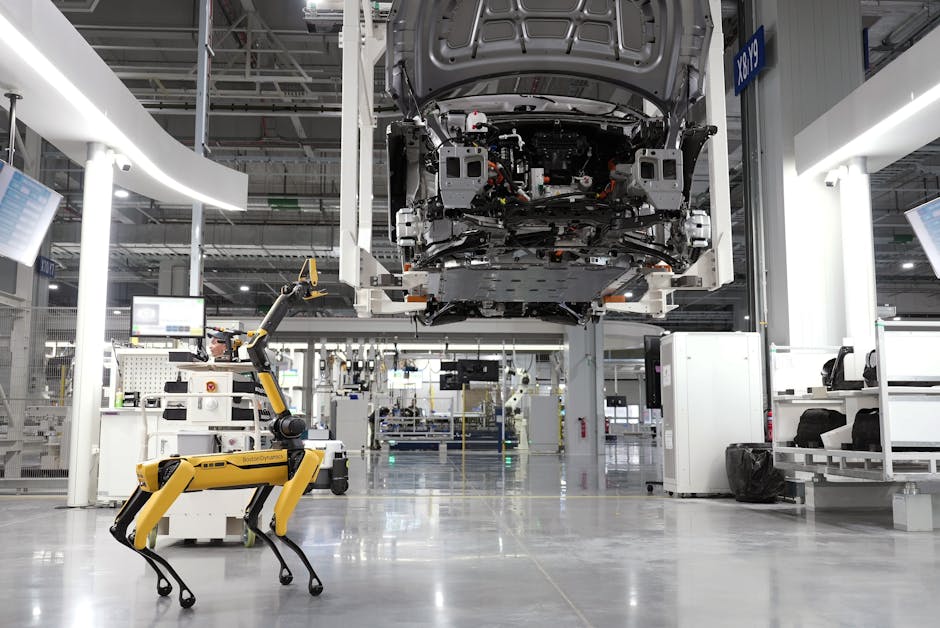
Manufacturers of industrial robots are leading technological innovations by creating machines that enhance production efficiency. These advanced robots perform complex tasks with precision, reducing human error. Industrial sectors benefit significantly from these automated solutions, boosting productivity and safety in various work environments.
Technological innovations in the field of industrial robotics are reshaping the manufacturing landscape. These advancements are not just about enhancing efficiency but also about enabling manufacturers to tackle complex tasks with ease. Imagine walking into a factory where robots work seamlessly alongside humans, performing intricate operations that were once thought impossible.
Advancements In Robotics
The evolution of robotics technology is nothing short of remarkable. Today’s robots are equipped with precision tools that allow them to handle delicate tasks in various industries. Manufacturers are constantly upgrading these robots to improve their speed and accuracy. Your smartphone or car might have components assembled by a robot, ensuring flawless quality. With newer materials and smarter designs, robots are now more adaptable. They can switch tasks faster, reducing downtime and boosting productivity. This means a quicker turnaround for products, keeping pace with consumer demand.
Ai Integration
Artificial intelligence is breathing new life into industrial robots. AI is making robots smarter by allowing them to learn and adapt. Imagine a robot that can predict maintenance needs before a breakdown occurs, saving time and resources. With AI, robots can analyze vast amounts of data, improving their decision-making process. This means fewer errors and a smoother production line. Have you ever wondered how your favorite gadgets are made without a hitch? The answer often lies in AI-enhanced robotics. AI also facilitates better human-robot collaboration. Robots can now understand and respond to human gestures, making interactions safer and more intuitive. Picture a future where working alongside a robot feels as natural as working with a colleague.
How do you think these innovations will shape the future of manufacturing? Are these advancements enough to address the challenges faced by industries today? The progress is undeniable, but the conversation on its impact is far from over.
Credit: greensafaris.com
Applications Across Industries
Industrial robots have transformed various sectors with their precision and efficiency. These robots perform tasks that are repetitive, dangerous, or require high precision. Their applications are vast and diverse. Let’s explore how different industries utilize these advanced machines.
Automotive Industry
The automotive industry relies heavily on industrial robots. Robots handle tasks like welding, painting, and assembly. Their precision ensures consistent quality in car manufacturing. They also speed up production lines, reducing overall manufacturing time. This leads to cost savings and increased output.
Electronics Manufacturing
Electronics manufacturing demands high precision and speed. Robots excel in assembling tiny components on circuit boards. They perform tasks like soldering and inspection with great accuracy. This reduces errors and enhances product reliability. Robots help meet the high demand for electronic devices.
Food And Beverage
The food and beverage industry uses robots for various tasks. Packaging and palletizing are common applications. Robots ensure products are packed efficiently and safely. They also assist in quality control, detecting defects or contamination. This maintains high standards and meets health regulations.
Economic Impact
Industrial robots have reshaped the global economy with their innovative capabilities. As you explore their economic impact, you might wonder how these machines influence the job market and productivity. This transformation is not just about technological advancement; it’s about how these robots redefine industries and everyday work experiences.
Job Market Changes
Industrial robots bring both challenges and opportunities to the job market. On one hand, they automate routine tasks, which can lead to job displacement. You might have heard stories of factory workers who had to adapt as robots took over assembly lines. These stories are real and highlight the need for workers to develop new skills.
However, industrial robots also create new opportunities. They generate demand for skilled technicians who maintain and program these machines. Imagine being part of a team that ensures robots function smoothly. Your expertise becomes crucial in this robot-driven world.
As industries evolve, so does the need for continuous learning. Are you prepared to reskill and embrace new roles in a robot-enhanced workplace?
Productivity Increases
Industrial robots significantly boost productivity. They work tirelessly, ensuring tasks are completed faster and more efficiently than human workers. I recall visiting a local factory where robots seamlessly handled packaging, speeding up production while maintaining quality.
This increase in productivity leads to higher output and reduced costs. Companies can produce more at a lower cost, which often translates to competitive pricing for consumers. Your business could experience a surge in profitability by integrating robotic technology.
Yet, it’s essential to balance productivity gains with employee welfare. How can you ensure that the human workforce remains engaged and motivated when robots handle the heavy lifting?
Industrial robots are not just transforming industries; they are reshaping the economic landscape. As you consider their impact, reflect on how these changes might affect your career and business strategies. Are you ready to harness the power of robots to drive economic growth?
Challenges And Solutions
Manufacturers of industrial robots face numerous challenges in today’s fast-paced technological landscape. These obstacles can hinder growth and innovation but are not insurmountable. By understanding these challenges and embracing effective solutions, you can pave the way for successful integration and operation of industrial robots in your manufacturing processes.
High Initial Costs
One of the most significant hurdles for manufacturers is the high initial cost of industrial robots. These costs include purchasing the robots, setting up infrastructure, and ongoing maintenance. It’s a substantial investment, especially for small to medium-sized businesses.
To tackle this challenge, consider leasing options or financing plans. These can spread the cost over time, making it more manageable. Also, explore government grants or subsidies that may be available for businesses investing in automation. Look into partnerships with technology providers to share costs and expertise.
Workforce Training
Integrating robots into manufacturing processes requires skilled personnel to operate, maintain, and troubleshoot these machines. Many manufacturers struggle with workforce training, as existing employees may lack the necessary skills.
Investing in training programs is essential. Collaborate with educational institutions to offer courses tailored to robotics and automation. Encourage your employees to participate in workshops or online courses. You might find that some employees are eager to learn and adapt, turning a challenge into an opportunity for growth.
Consider cross-training employees to handle multiple roles, including robot operation. This not only boosts your workforce’s versatility but also enhances problem-solving capabilities.
As you navigate these challenges, ask yourself: Are you leveraging all available resources to minimize costs and maximize training outcomes? Addressing these questions can lead to practical solutions that drive your business forward.
Future Trends
The world of industrial robotics is evolving rapidly. Manufacturers are pushing boundaries with new technologies. Future trends in robotics promise exciting advancements. These trends focus on collaboration and sustainability. Let’s explore these areas to understand the potential impact.
Collaborative Robots
Collaborative robots, or cobots, are changing factories. They work alongside humans, enhancing productivity. Cobots are designed to be safe and easy to use. Their sensors and software ensure smooth operations. These robots handle tasks like assembly and packaging. Cobots adapt to various environments quickly. They require less programming than traditional robots. Manufacturers find them cost-effective and flexible.
Sustainability In Robotics
Sustainability is crucial in modern manufacturing. Robotics companies are focusing on eco-friendly designs. Energy-efficient robots reduce power consumption. They also minimize waste and emissions. Recyclable materials are used in robot production. This approach reduces the environmental footprint. Robots also improve resource management in factories. Smart systems optimize energy use during operations. Sustainability in robotics ensures a greener future.
Frequently Asked Questions
What Industries Use Industrial Robots?
Industrial robots are widely used in manufacturing, automotive, electronics, and food processing industries. They enhance efficiency, precision, and safety in tasks like assembly, welding, painting, and packaging. These robots help companies improve productivity and maintain competitive advantages by automating repetitive tasks, reducing human error, and optimizing production processes.
How Do Manufacturers Benefit From Industrial Robots?
Manufacturers benefit from industrial robots by increasing production speed and consistency. Robots reduce labor costs and minimize errors. They also improve safety by handling dangerous tasks. With automation, manufacturers can respond quickly to changing market demands, ensuring flexibility and scalability in operations.
Overall, robots enhance productivity and competitiveness.
Are Industrial Robots Cost-effective?
Industrial robots are cost-effective due to their ability to perform tasks faster and more accurately than humans. They reduce labor costs, minimize errors, and improve production efficiency. Although initial investments are high, long-term savings and increased productivity make them a worthwhile investment for many manufacturers seeking competitive advantages.
What Challenges Do Manufacturers Face With Robots?
Manufacturers face challenges such as high initial costs and complex integration processes. Training staff to work with robots is essential. Maintenance and updates require ongoing investment. Adapting to technological advancements is crucial for continued efficiency. Despite challenges, manufacturers gain long-term benefits from improved productivity and competitiveness.
Conclusion
Industrial robot manufacturers are shaping the future of automation. Their innovations drive efficiency and precision. Companies worldwide benefit from these advancements. Increased productivity and reduced human errors are key outcomes. This industry continues to grow and evolve rapidly. Staying updated with trends is crucial for success.
Consider exploring how robots can enhance your operations. The potential is vast and impactful. Embrace the technology for better results. Industrial robots are more than machines; they are partners in progress. Keep an eye on developments and seize opportunities. Your business can thrive in this robotic era.