
Are you trying to decide between Google and Amazon for your cloud computing needs? You’re not alone.
In a world where businesses rely heavily on digital solutions, choosing the right cloud platform can feel overwhelming. Both Google Cloud and Amazon Web Services (AWS) offer powerful tools, but which one is the right fit for you? This decision can impact your business’s efficiency, cost management, and even its future growth.
Dive into this article to uncover the key differences, benefits, and potential pitfalls of each platform. Discover how your choice could unlock new opportunities and propel your business forward. Don’t miss out on this critical insight—you’ll want to make sure your decision is informed and strategic.
Cloud Computing Market Landscape
Google and Amazon lead the cloud computing market with distinct strengths. Google Cloud offers advanced data analytics tools, appealing to businesses focused on machine learning. Amazon Web Services (AWS) excels in infrastructure and a vast range of services, attracting companies seeking scalability and reliability.
The cloud computing market is an ever-evolving landscape that continuously shapes how businesses operate. As more companies embrace digital transformation, the demand for robust, scalable, and cost-effective cloud solutions has skyrocketed. This surge has fueled intense competition among the industry’s giants, with Google and Amazon standing out as two leading contenders.Rise Of Cloud Technology
The rise of cloud technology has been nothing short of transformative. In recent years, it has moved from being a buzzword to a fundamental component of modern business operations. The convenience of accessing resources on demand has made cloud computing a compelling choice. Businesses no longer need to invest heavily in physical infrastructure. Instead, they can leverage cloud solutions to enhance flexibility and reduce costs. This shift has empowered even small startups to compete on a global scale. Cloud technology is not just about storage; it’s about innovation. Many companies use cloud services to deploy advanced applications, harness big data, and improve customer experiences. Have you considered how cloud technology might reshape your business strategy?Key Players In The Industry
In the cloud computing arena, a few key players dominate the market. Amazon Web Services (AWS) and Google Cloud Platform (GCP) are at the forefront. Each brings unique strengths to the table, catering to diverse business needs. AWS, a pioneer in the field, offers a comprehensive suite of cloud services. Its vast global infrastructure and extensive range of features make it a go-to choice for enterprises. Are you aware that AWS powers some of the largest companies in the world? On the other hand, Google Cloud is making significant strides with its focus on artificial intelligence and machine learning. Google’s expertise in data analytics provides a competitive edge. Could Google’s data-driven approach be what your business needs to thrive? The cloud market is vibrant, with each player continually innovating to capture market share. Understanding these dynamics can help you make informed decisions about which cloud provider aligns best with your goals. As you explore the cloud computing landscape, which service provider stands out to you?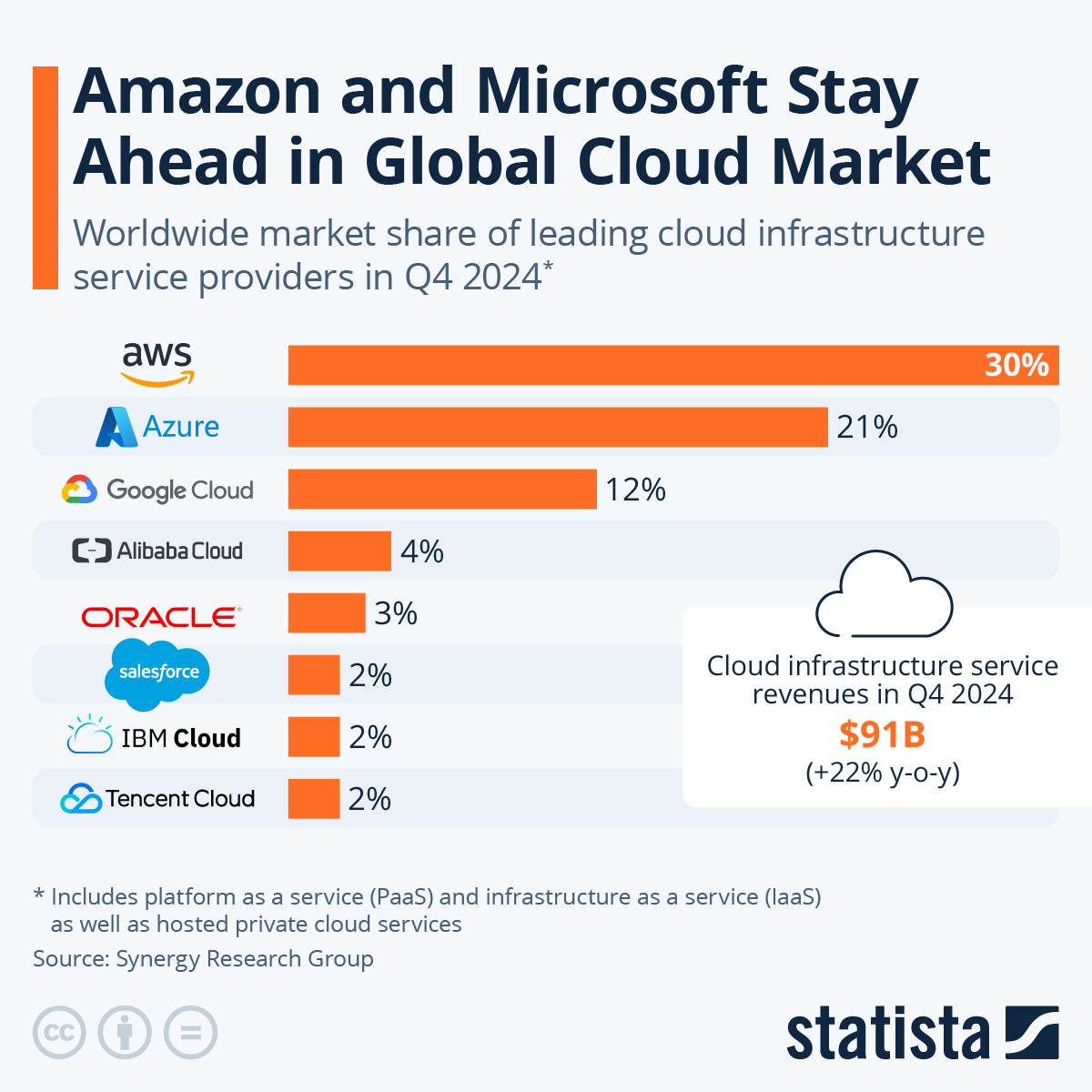
Credit: www.statista.com
Google Cloud Platform Overview
Google Cloud Platform (GCP) stands as a powerhouse in the cloud computing world, offering a comprehensive suite of services designed to meet diverse business needs. As someone who’s navigated the maze of cloud solutions, GCP’s ability to transform digital operations is truly impressive. You might wonder what sets it apart and why you should consider it for your cloud journey.
Core Services And Features
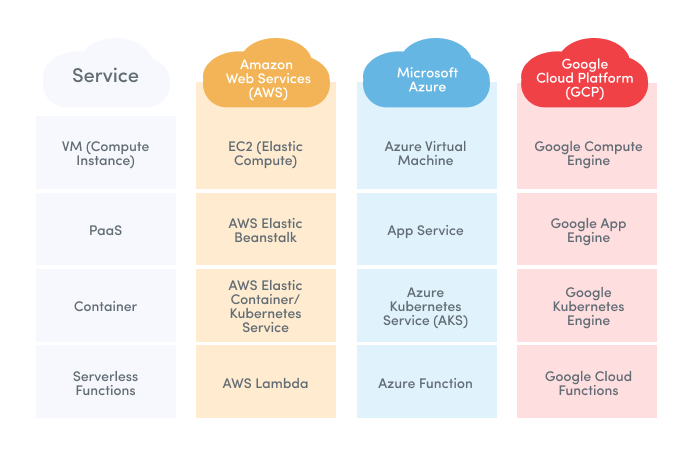
GCP delivers a range of core services that cater to various computing needs. From virtual machines and Kubernetes to data analytics and AI, the platform is robust. Imagine having the flexibility to scale your operations with Compute Engine’s virtual machines or harness the power of BigQuery for analyzing big data. The platform offers a seamless integration experience, ensuring your cloud resources work harmoniously.
Security is another critical feature. With Google’s expertise in handling vast amounts of data, GCP provides top-notch security measures, including encryption and compliance with industry standards. This ensures your data remains protected, giving you peace of mind.
Unique Selling Points
What makes GCP stand out? Its global network infrastructure is a key selling point. Google owns and operates one of the largest networks, ensuring fast and reliable connections worldwide. This is particularly beneficial if your business operates on a global scale.
Another unique aspect is its AI and machine learning capabilities. With tools like TensorFlow and Google AI, GCP empowers you to integrate advanced technologies into your operations. This can open new doors for innovation and efficiency. Have you ever considered how AI could streamline your processes?
Target Industries
GCP caters to a variety of industries, making it versatile for businesses of all sizes. The healthcare sector, for instance, benefits from GCP’s data management solutions, enabling efficient handling of medical records and patient data. Are you in retail? GCP’s analytics can enhance customer insights, driving better marketing strategies.
The finance industry also finds value in GCP’s robust security and compliance offerings, ensuring sensitive financial data is safeguarded. No matter your industry, GCP offers tailored solutions to meet specific needs, helping you achieve your business goals.
So, as you weigh your options between Google and Amazon cloud services, consider how GCP’s features align with your business objectives. Could GCP be the missing piece in your cloud strategy?
Amazon Web Services Overview
Amazon Web Services (AWS) is like a powerful toolbox for businesses of all sizes. It’s the go-to choice for companies wanting to scale quickly and efficiently. But what exactly makes AWS stand out in the crowded cloud computing market?
Core Services And Features
AWS offers a wide array of services that cater to different needs. At its core, AWS provides computing power, storage options, and networking capabilities. It’s like having a virtual office where you can run applications, store data, and connect with your team seamlessly.
Key services include Amazon EC2 for scalable computing capacity, Amazon S3 for storage, and Amazon RDS for managed database services. These services are designed to be user-friendly, allowing you to set up and manage with minimal technical expertise.
With AWS, you can also benefit from advanced features like AI and machine learning with Amazon SageMaker. This means you can innovate without needing a team of data scientists.
Unique Selling Points
One unique aspect of AWS is its extensive global network. With data centers in multiple locations worldwide, you can ensure fast and reliable access to your applications and data.
AWS is also known for its robust security features. It offers tools for data encryption, identity management, and compliance, making it a trusted choice for sensitive data.
Moreover, AWS’s pay-as-you-go pricing model is a game-changer. You only pay for what you use, which is perfect for businesses looking to optimize costs.
Target Industries
AWS caters to a diverse range of industries. Tech startups love it for its flexibility and scalability, allowing them to grow without infrastructure worries.
In the healthcare sector, AWS supports data storage and compliance, crucial for patient data management. Meanwhile, the financial industry benefits from its security features to protect sensitive financial information.
Have you ever wondered how streaming giants manage to deliver seamless content worldwide? AWS powers these platforms, ensuring high-quality delivery to millions of users. Could AWS be the right solution for your industry?
By understanding AWS’s offerings, you can better decide if it’s the right fit for your business needs. What challenges do you face that AWS could solve?
Credit: www.bmc.com
Pricing Models Compared
Choosing between Google Cloud and Amazon Web Services can be tricky. Pricing models play a big role in decision-making. This section dives into how each platform structures its costs. Understanding these can help businesses make informed choices.
Cost Structures
Google Cloud offers a straightforward pricing plan. It calculates costs based on resources used. Amazon has a more complex system. It uses tiers and different rates for various services. Both offer per-second billing. This feature helps users pay for exact usage.
Pay-as-you-go Vs. Subscription
Google Cloud uses a pay-as-you-go model. You pay for what you use. Amazon offers both pay-as-you-go and subscriptions. Subscriptions can lock in lower rates. They require long-term commitment. This can be beneficial for stable workloads.
Hidden Costs And Discounts
Hidden costs can surprise users. Google Cloud’s pricing is transparent. Amazon has some hidden fees. These may arise from data transfers or additional services. Both platforms offer discounts. Google provides sustained usage discounts. Amazon offers reserved instance discounts. These can significantly reduce costs. Comparing these benefits is crucial.
Performance And Reliability
Google and Amazon Cloud Computing compete on performance and reliability. Google Cloud boasts strong data analytics capabilities. Amazon Web Services (AWS) excels in global reach and uptime, ensuring consistent service. Both provide robust solutions, catering to various business needs efficiently.
When comparing Google Cloud and Amazon Web Services (AWS), performance and reliability often take center stage. These two giants offer robust cloud computing solutions, but how do they stack up against each other in terms of ensuring smooth operation and consistent availability? Understanding their strengths can guide you in making the right choice for your specific needs.Uptime Guarantees
Both Google and Amazon promise high uptime, crucial for businesses relying on cloud services. AWS boasts a remarkable track record, offering a 99.99% uptime guarantee. This means your services are almost always available, minimizing disruptions. Google Cloud also offers a competitive uptime guarantee, matching AWS with 99.99%. But it’s essential to read the fine print. Consider your specific service-level agreement (SLA) and how it aligns with your business needs.Speed And Efficiency
Speed is a critical factor when evaluating cloud services. AWS’s global infrastructure ensures fast and efficient service delivery. Whether you’re in North America or Asia, AWS’s data centers are strategically located for optimal speed. Google Cloud isn’t far behind, leveraging its expertise in search and data processing. Their infrastructure is designed to handle massive amounts of data quickly. You might find Google Cloud faster for data-intensive applications, particularly those involving machine learning.Handling High Traffic
High traffic can be a significant stress test for any cloud service. AWS has proven capabilities in handling spikes, thanks to its robust autoscaling features. It can automatically adjust resources to meet demand, ensuring smooth performance during peak times. Google Cloud also excels in handling high traffic. Its autoscaling is particularly effective for applications with unpredictable workloads. Think about times when your business might experience sudden traffic surges – Google Cloud could be your ally. Which provider resonates more with your needs? If uptime is your primary concern, both offer excellent assurances. For speed and efficiency, consider where your applications will run best. And if high traffic is a challenge, weigh the autoscaling capabilities of each. Your unique requirements will guide the best choice for your cloud computing needs.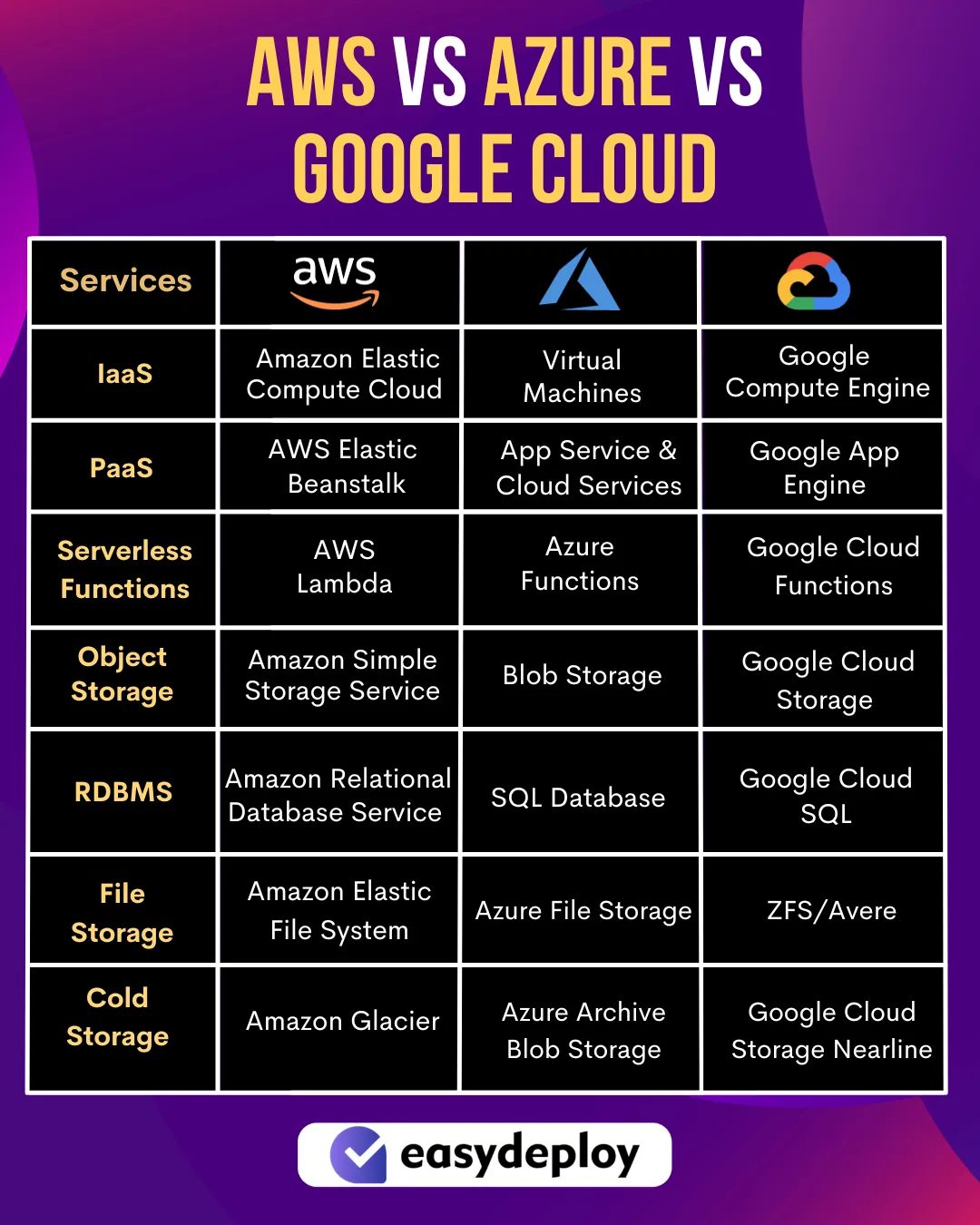
Credit: www.easydeploy.io
Security And Compliance
Google and Amazon Cloud Computing offer robust security and compliance features. Google Cloud provides advanced threat detection and data encryption. Amazon Web Services excels with its comprehensive compliance certifications and strong identity management. Both platforms prioritize user data protection.
In the digital age, security and compliance are crucial aspects of cloud computing. As businesses increasingly store sensitive data in the cloud, ensuring this data is secure and complies with relevant regulations becomes vital. Google Cloud and Amazon Web Services (AWS) are two giants in the cloud industry, both offering robust solutions to address these concerns. But which platform should you trust with your data? Let’s dive into how each handles security and compliance.Data Protection Measures
Google Cloud employs advanced encryption techniques for data protection. Your data is encrypted both at rest and in transit. This means if someone intercepts it, they can’t read it without the encryption key. AWS offers similar encryption services, ensuring your data is secure wherever it is stored. They have a comprehensive suite of security tools to monitor and protect your data continuously. Have you ever experienced data loss? Reflecting on such moments, you realize the importance of encryption. Both platforms focus heavily on keeping your data safe from unauthorized access.Compliance With Regulations
Google Cloud adheres to global standards, including GDPR and HIPAA. They offer tools to help you meet compliance requirements specific to your industry. AWS also supports compliance with various regulations, providing services tailored to help you navigate complex legal landscapes. They provide detailed compliance documentation and resources. Understanding these regulations can be daunting. It’s reassuring to know both Google and AWS prioritize keeping your data compliant. How confident are you in your current cloud provider’s compliance capabilities?User Trust And Safety
Google Cloud builds trust through transparency. They regularly update users about security practices and offer extensive documentation. This openness fosters a sense of safety among users. AWS equally emphasizes user trust, with a strong focus on securing user data. They invest heavily in security infrastructure to ensure user safety is never compromised. Both platforms aim to earn your trust by consistently prioritizing security and compliance. Feeling secure in your cloud provider can significantly impact your business’s success. Which provider makes you feel more secure with your data?Integration And Compatibility
Choosing the right cloud service can be a game-changer for your business, especially when it comes to integration and compatibility. Both Google Cloud and Amazon Web Services (AWS) offer robust solutions, but the differences lie in how they interact with other software, platforms, and handle migration. These aspects can affect your operational efficiency and the ease with which you adapt to changing tech needs.
Third-party Software Support
Google Cloud and AWS both support a wide range of third-party applications. Google Cloud often excels in seamless integration with its suite of productivity tools like Google Workspace. Imagine having all your data effortlessly sync with apps you already use daily.
However, AWS also shines with its extensive marketplace offering a myriad of third-party solutions. You might find AWS’s ecosystem tempting if you rely heavily on enterprise software like SAP or Oracle. Which environment aligns better with your current software needs?
Cross-platform Integration
Cross-platform integration is crucial if your business uses multiple systems. Google Cloud is known for its open-source friendliness. If you have a tech team that loves working with open-source projects, Google Cloud might be your playground.
On the other hand, AWS offers robust APIs for integrating with various platforms, making it a flexible choice. Have you ever faced challenges synchronizing data across different platforms? With AWS, those hurdles might be easier to overcome.
Ease Of Migration
Migrating to a new cloud provider can feel like moving to a new home. Google Cloud offers tools like Migrate for Compute Engine to simplify the transition. You get step-by-step guidance, making the process less daunting.
AWS provides its Migration Hub, allowing you to track progress across multiple migrations. Think about how much time and stress you can save with clear visibility into your migration tasks. Which provider do you think will make your migration process smoother?
Deciding between Google Cloud and AWS for integration and compatibility involves weighing these factors. Your choice should reflect your current needs and future aspirations. Have you considered how each provider could support your business’s growth and innovation?
Customer Support And Service
Customer support and service play a crucial role in cloud computing. Both Google Cloud and Amazon Web Services (AWS) offer extensive support options. This section explores the differences in their customer support and service.
Availability Of Support Channels
Google Cloud provides several support channels. Users can access email, chat, and phone support. AWS also offers multiple support channels. These include live chat, phone support, and a support ticket system. Both platforms ensure their users have help when needed.
Quality Of Customer Service
Google Cloud’s customer service is known for its quick responses. They ensure users get solutions promptly. AWS also prides itself on strong customer service. Their support team is knowledgeable and efficient. Both companies aim to resolve issues quickly.
Community And Forums
Google Cloud has a vibrant community. Users can share insights and solutions. AWS also has an active community forum. Here, users can find answers and share experiences. Both platforms benefit from strong user communities. These forums offer valuable peer support.
Future Trends In Cloud Computing
Google and Amazon are leading players in cloud computing, each offering unique services. Google’s focus is on artificial intelligence and machine learning, making it ideal for tech-driven businesses. Amazon emphasizes scalability and flexibility, catering to diverse business needs. As cloud demand grows, their competition shapes future trends in technology.
In the fast-paced world of cloud computing, the rivalry between Google Cloud and Amazon Web Services (AWS) is a thrilling spectacle. As we look towards the future, the landscape is set to evolve with groundbreaking trends that will redefine how businesses operate. It’s essential for you to stay ahead of these changes, not just to survive but to thrive.Emerging Technologies
New technologies are emerging at a rapid pace, transforming the cloud computing arena. Quantum computing is one example. It promises to solve complex problems that are beyond the reach of classical computers. Edge computing is another trend to watch. It brings data processing closer to the source, reducing latency and improving speed. Imagine seamless streaming or faster data analysis. Serverless computing is gaining traction as well. It allows you to build and run applications without managing infrastructure, saving time and costs.Market Growth Predictions
Cloud computing is forecasted to grow significantly. Analysts predict that by the next few years, the market will double in size. This growth presents enormous opportunities for businesses to expand their digital strategies. AWS and Google Cloud are major players in this growth. Their relentless innovation keeps pushing the boundaries, enticing more businesses to migrate to the cloud. As a business owner, this could mean more tools and services at your disposal. But, how do you plan to leverage this growth? Aligning your business strategies with market trends can be the key to capturing new opportunities.Impact Of Ai And Machine Learning
AI and machine learning are revolutionizing cloud computing. They automate tasks, enhance data analysis, and provide deeper insights. Services like Google’s AI Platform or AWS’s SageMaker are making AI accessible to businesses of all sizes. AI is not just a buzzword anymore. It’s a practical tool that can optimize operations and reduce costs. Picture a system that predicts customer behavior or streamlines supply chains. The real question is, how can you integrate AI into your cloud strategy? Understanding its potential can give you a competitive edge in an increasingly tech-driven market. In conclusion, the future of cloud computing is both exciting and challenging. By staying informed about emerging technologies, market growth, and AI advancements, you can position your business at the forefront of innovation. Are you ready to embrace the future of cloud computing?Frequently Asked Questions
What Is Google Cloud’s Main Advantage?
Google Cloud’s main advantage is its robust data analytics tools. It offers powerful machine learning and AI capabilities. These features make it ideal for businesses focusing on data-driven decisions. Google Cloud also provides seamless integration with other Google services.
How Does Amazon Aws Pricing Work?
Amazon AWS uses a pay-as-you-go pricing model. You only pay for the resources you use. This flexible pricing helps businesses manage costs effectively. AWS also offers reserved instances for long-term commitments, providing additional savings.
Which Is Better For Startups, Google Or Aws?
Google Cloud is better for startups focusing on innovation. It provides tools that support rapid development and scalability. AWS is ideal for startups needing extensive global infrastructure. Both offer free tiers for exploring their services.
Can Google Cloud Improve Ai Applications?
Yes, Google Cloud enhances AI applications with its advanced AI tools. These include TensorFlow and Cloud Machine Learning Engine. Google’s AI capabilities allow businesses to build smart applications. They can leverage powerful data analysis for better insights.
Conclusion
Choosing between Google and Amazon for cloud computing depends on needs. Google offers robust data analytics and AI tools. Amazon provides extensive global infrastructure and diverse services. Both platforms excel in security and scalability. Consider budget, specific requirements, and integration capabilities.
Each cloud service has unique strengths. Businesses should align choices with long-term goals. Assess performance, support, and pricing plans. Tailor the choice based on technical needs and business strategy. Cloud computing is evolving. Stay informed and adaptable. The right choice enhances efficiency and innovation.
Explore both options to make an informed decision.



