
Imagine holding a device in your hand that can measure motion, detect orientation, and even help you navigate through your favorite apps. That’s the power of the accelerometer sensor in your smartphone.
You might not think about it often, but this tiny piece of technology impacts your daily life in more ways than you realize. From tracking your steps to adjusting your screen’s orientation, the accelerometer is at the heart of your smartphone’s functionality.
Curious about how this small sensor makes such a big difference in your mobile experience? Let’s uncover the secrets behind the accelerometer sensor and explore how it enhances your smartphone’s capabilities.

Credit: www.researchgate.net
Evolution Of Motion Detection
The evolution of motion detection in smartphones is fascinating. From simple mechanical structures to advanced digital sensors, technology has progressed. This evolution has enhanced our mobile experience. Today, smartphones detect motion with impressive accuracy. Let’s explore how this transition occurred.
From Mechanical To Digital
Early motion detection relied on mechanical parts. These were bulky and slow. They used springs and gears to measure movement. With time, digital sensors replaced these mechanical parts. Digital sensors are compact and precise. They operate with less power. This shift marked a significant milestone in mobile technology.
Integration In Mobile Devices
Integrating accelerometer sensors in smartphones changed user interaction. These sensors detect phone orientation and movement. They enable screen rotation and step counting. Developers use them for gaming and fitness apps. This integration has made devices more interactive. Sensors have become smaller and more efficient. They now fit easily into slim smartphone designs.
How Accelerometers Work
Smartphones have become an essential part of daily life. They contain numerous sensors that enhance functionality. One of these sensors is the accelerometer. Understanding how accelerometers work can help grasp their importance in smartphones.
Accelerometers measure acceleration forces. These forces can be static, like gravity, or dynamic, resulting from movement. This measurement helps determine the orientation of the device.
Basic Principles
Accelerometers rely on detecting changes in velocity. They use small mass elements suspended within the sensor. When the phone moves, these elements shift, altering electrical signals. The sensor reads these changes, translating them into movement data.
Types Of Accelerometers
There are several types of accelerometers. The most common type in smartphones is the MEMS accelerometer. MEMS stands for Micro-Electro-Mechanical Systems. These are tiny sensors that integrate mechanical and electrical components.
Another type is piezoelectric accelerometers. They use crystals that generate voltage under pressure. While not common in phones, they are used in other industries.
Capacitive accelerometers are also used. They measure changes in capacitance due to movement. These types provide precise data, ideal for smartphones.
Applications In Smartphones
The accelerometer sensor in smartphones is a vital component. It detects changes in motion and orientation. This ability offers a wide range of applications. From gesture recognition to gaming, fitness, and navigation. Let’s explore these fascinating uses.
Gesture Recognition
Accelerometers play a key role in gesture recognition. They detect movements and translate them into actions. This allows users to control their devices by waving or tilting. It enhances user interaction and device accessibility.
Gaming Enhancements
Gaming on smartphones is more immersive with accelerometers. They enable motion-based controls for games. Players can steer by tilting their devices. This adds a layer of realism and excitement to mobile gaming.
Fitness Tracking
Fitness apps utilize accelerometer sensors extensively. They track steps, measure activity levels, and monitor movements. Users can see their progress and set fitness goals. The sensor provides accurate data for effective fitness tracking.
Navigation And Mapping
Accelerometers assist in navigation and mapping applications. They help in detecting movement patterns and orientation changes. This ensures accurate positioning and route mapping. Users rely on these sensors for real-time navigation aids.

Credit: blogs.sas.com
Impact On User Experience
Accelerometer sensors in smartphones enhance user experience by detecting phone orientation and movement. They enable smooth screen rotation and precise motion control for various applications. This sensor improves interaction, making devices more intuitive and responsive for users.
The accelerometer sensor in smartphones has transformed the way you interact with your device. Its impact on user experience is profound and multi-faceted. This tiny sensor, often unnoticed, plays a crucial role in making your smartphone intuitive and responsive.Enhanced Interaction
The accelerometer sensor allows your smartphone to understand its orientation. When you flip your phone from portrait to landscape mode, the accelerometer detects the change instantly. This ensures that the content adjusts seamlessly, enhancing your viewing experience. Imagine playing a racing game. You tilt your phone to steer, and the accelerometer translates these movements into actions within the game. This level of interaction makes the experience immersive and engaging. Are there other apps where you notice this feature? Perhaps when scrolling through photos or browsing documents?Improved Accessibility
Accessibility is not just about features; it’s about inclusivity. The accelerometer contributes significantly here. For users with motor disabilities, gesture-based controls can be a game-changer. Instead of tapping buttons, tilting the device can perform actions, making navigation easier. Think about how you use your phone in daily life. Maybe you’ve set up your phone to silence calls by flipping it face-down. This simple action, enabled by the accelerometer, provides a more accessible way to manage notifications without needing to tap or swipe. Your smartphone becomes more than a device; it becomes an extension of your movements and intentions. How might this affect the way you perceive technology’s role in your life? The possibilities are endless, and the accelerometer is at the heart of this transformative experience.Challenges And Limitations
Smartphone accelerometer sensors face challenges like precision in detecting movement. Limitations include sensitivity to environmental factors. These issues affect accurate motion tracking and overall performance.
Accelerometer sensors are integral to the functionality of smartphones, transforming them into dynamic tools that can detect motion and orientation. However, these sensors come with their own set of challenges and limitations. Understanding these can help you make informed decisions when using your smartphone for various applications.Accuracy Concerns
The accuracy of accelerometer sensors can be influenced by several factors. Environmental conditions, such as temperature and humidity, can affect sensor readings. Imagine trying to play a motion-sensitive game during a hot summer day; the sensor may not respond as you expect. Moreover, every smartphone model might have different sensor calibrations. This means the same motion might be interpreted differently on different devices. Have you ever noticed a discrepancy in your step count on two different smartphones? That’s a classic example of sensor accuracy issues.Power Consumption
Accelerometers, while being efficient, do consume power. Every time you use apps that rely on motion detection, your battery takes a hit. Frequent use of these apps can drain your smartphone battery faster, leaving you scrambling for a charger. Consider how often you use fitness tracking apps. You might find your phone’s battery life significantly reduced due to constant sensor activity. Do you often disable motion-sensitive features to save battery life? This is a common strategy among users to counteract power consumption issues. Understanding these challenges can enhance your smartphone experience. How do you optimize your phone’s settings to balance functionality and power?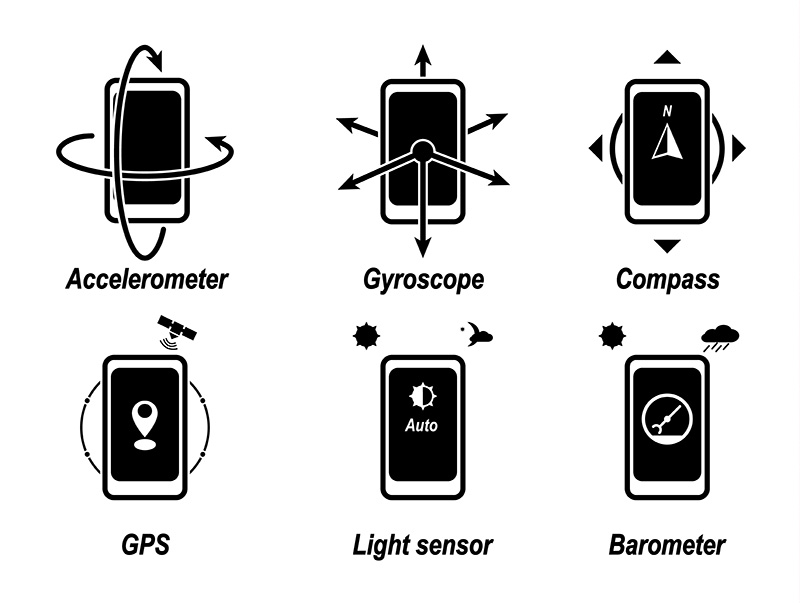
Credit: www.aau.edu
Future Of Accelerometers In Smartphones
The future of accelerometers in smartphones holds exciting potential. As technology evolves, these sensors could play a bigger role in our devices. They might offer new experiences and improve how we use smartphones every day.
Advancements In Technology
Technology is always changing. Smartphones are becoming more advanced. Accelerometers will benefit from these changes. They could become more accurate. Smaller designs are possible. This means they could fit into slimmer devices. Faster response times are likely. This could improve user experience. Better energy efficiency might extend battery life. These advancements could make smartphones more appealing.
Potential New Applications
Accelerometers might find new uses in smartphones. Fitness tracking could become more accurate. Apps could measure movements more precisely. Enhanced gaming experiences could arise. Games might respond better to movements. Virtual reality apps could improve. They might offer more immersive experiences. Health monitoring could benefit too. Smartphones might detect falls or sudden movements. These applications could make smartphones more useful.
Frequently Asked Questions
What Is An Accelerometer In A Smartphone?
An accelerometer is a sensor that measures acceleration forces. It detects changes in motion and orientation. This allows smartphones to determine their position and movement. It’s used in various applications like fitness tracking, gaming, and screen rotation.
How Does An Accelerometer Work In Phones?
Accelerometers detect changes in velocity and orientation. They measure acceleration forces along three axes: X, Y, and Z. This data helps smartphones understand motion and position. The sensor uses microscopic crystals that produce voltage when stressed by acceleration.
Why Is An Accelerometer Important In Smartphones?
Accelerometers enhance smartphone functionality by enabling motion detection. They allow automatic screen rotation and improve app experiences. They’re crucial for fitness tracking, gaming, and augmented reality. Their data helps apps provide accurate and responsive features.
Can An Accelerometer Affect Battery Life?
Yes, accelerometers can impact battery life. Continuous data processing requires energy, potentially draining the battery faster. Efficient software design minimizes this effect. Apps should use accelerometer data sparingly to preserve battery life.
Conclusion
Accelerometer sensors make smartphones smarter. They detect movement and orientation changes. This enhances user experience and enables features like screen rotation. Gaming apps use these sensors for immersive gameplay. Health apps track physical activity accurately. Their importance continues to grow with technology advancement.
Understanding accelerometers helps users appreciate their smartphones more. It’s a small component with a significant impact. Smartphones rely on these sensors for many functions. They are essential in today’s mobile tech landscape. Embracing this knowledge can enrich daily smartphone use.
Your smartphone is more than a communication tool. It’s a sophisticated device with powerful sensors.



