

Imagine having access to unlimited computing power and storage without needing to invest in expensive hardware. This is the reality of cloud computing, and understanding its resources can transform the way you work and manage your data.
As you dive into this world, you’ll discover how cloud services can boost your productivity, streamline your operations, and save you money. Whether you’re a tech-savvy entrepreneur or just curious about enhancing your digital toolkit, this article will guide you through the essential resources of cloud computing.
Prepare to unlock potential you didn’t know you had, and revolutionize the way you approach technology.
Cloud Computing Basics
Cloud Computing Basics are essential for anyone navigating today’s digital landscape. Imagine having access to powerful computing resources without owning any hardware. Sounds too good to be true? Well, that’s exactly what cloud computing offers. It has transformed how businesses operate and how you manage your personal tech needs. Let’s explore the core components of cloud computing and why it matters to you.
What Is Cloud Computing?
Cloud computing is a way to access technology services over the internet. Instead of buying and maintaining physical servers, you can use these resources on demand. This means you only pay for what you use, much like how you pay for utilities.
Think about how you store photos on your phone. Would you prefer them taking up all your phone’s space, or would you rather have them saved securely online? The same concept applies to businesses storing data and running applications.
Types Of Cloud Services
There are three main types of cloud services:
- Infrastructure as a Service (IaaS):Provides virtualized computing resources over the internet. You get the basic building blocks, like virtual machines and storage.
- Platform as a Service (PaaS):Offers a platform allowing you to develop, run, and manage applications without dealing with infrastructure issues.
- Software as a Service (SaaS):Delivers software applications over the internet, on a subscription basis. Think of tools like Google Workspace or Microsoft Office 365.
Each service type meets different needs. Which one aligns with your goals?
Public, Private, And Hybrid Clouds
There are also different deployment models:
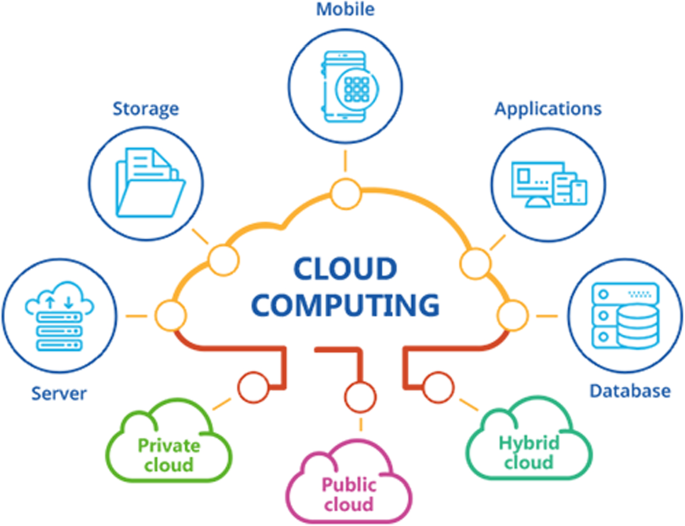
- Public Cloud:Services are offered over the internet to anyone who pays. It’s like renting space in a shared office building.
- Private Cloud:Dedicated to a single organization. This is like owning your own office, providing more control and privacy.
- Hybrid Cloud:Combines public and private clouds, allowing data and applications to move between them. This is akin to having a private office with access to shared resources when needed.
Which model suits your needs? Consider factors like cost, security, and scalability. Recognizing the right fit can make a significant difference in efficiency and effectiveness.
Cloud computing isn’t just a trend; it’s a strategic advantage. Whether you’re a tech-savvy individual or a business leader, understanding the basics can open up a world of possibilities. How will you leverage these resources for personal or professional growth?
Credit: link.springer.com
Key Resources In Cloud Computing
Cloud computing offers a range of resources that empower businesses. It provides flexibility, scalability, and cost-efficiency. Understanding key resources helps maximize cloud benefits. Let’s explore these essential elements of cloud computing.
Infrastructure As A Service (iaas)
IaaS provides virtualized computing resources over the internet. It includes storage, networks, and servers. Businesses rent these resources instead of owning physical hardware. IaaS offers flexibility and scalability. It allows quick adjustments to computing needs. Popular IaaS providers include AWS, Google Cloud, and Azure.
Platform As A Service (paas)
PaaS offers a platform for developers to create applications. It provides tools, libraries, and services for software development. Developers focus on coding without managing infrastructure. PaaS speeds up the development process. It is ideal for collaborative projects and rapid prototyping. Examples include Heroku, OpenShift, and Google App Engine.
Software As A Service (saas)
SaaS delivers software applications via the internet. Users access software without installing it on devices. It is convenient and cost-effective. SaaS handles updates and maintenance. Common SaaS applications include email, customer management, and collaboration tools. Top providers are Microsoft Office 365, Salesforce, and Dropbox.
Benefits Of Cloud Resources
Cloud resources offer many benefits for businesses. They help improve operations and efficiency. Companies use cloud resources to store data, run applications, and more. Let’s explore the key benefits of cloud resources.
Scalability And Flexibility
Cloud resources are scalable. They grow with your business needs. Increase resources without buying new hardware. The flexibility allows businesses to adapt quickly. Respond to changing demands easily. Customize solutions to fit specific needs.
Cost Efficiency
Using cloud resources reduces costs. Pay only for what you use. No need for expensive equipment. Maintenance costs are lower. This approach saves money and increases profits. Optimize spending by adjusting resources based on demand.
Enhanced Collaboration
Cloud resources improve collaboration. Teams work together from anywhere. Share files and data effortlessly. Access information in real-time. Collaboration tools in the cloud boost productivity. Communication becomes smooth and efficient.
Cloud Storage Solutions
Explore cloud storage solutions, essential resources in cloud computing. These solutions offer flexible data access, secure storage, and facilitate collaboration. Ideal for individuals and businesses seeking efficient data management.
In the ever-evolving landscape of technology, cloud storage solutions have become a cornerstone for businesses and individuals alike. The ability to store, access, and manage data online offers unprecedented flexibility and efficiency. Whether you’re a business owner looking to scale operations or an individual safeguarding personal data, cloud storage is a versatile tool that can cater to your needs. But with so many options available, how do you choose the right one? Let’s dive into the various aspects of cloud storage solutions and discover what makes them indispensable.Data Storage Options
When considering cloud storage, you have several data storage options. Popular services like Google Drive, Dropbox, and Amazon S3 offer different features tailored to various needs. Google Drive is great for seamless integration with other Google services, while Dropbox is known for its user-friendly interface. Amazon S3, on the other hand, is perfect for businesses needing scalable storage solutions. Understanding your specific requirements is key. Are you looking for easy collaboration, or do you need storage that can handle large-scale data? Knowing your priorities will guide you in choosing the right service.Security And Privacy Concerns
Security and privacy are at the forefront of cloud storage discussions. You might wonder, how safe is your data online? Reputable cloud services use encryption to protect your data, both in transit and at rest. This means your data is scrambled and unreadable without the correct decryption key. However, it’s essential to choose a provider with a strong reputation for security. Research their security protocols and read user reviews. It’s also wise to enable two-factor authentication for an extra layer of protection. Remember, your data’s safety is a shared responsibility between you and the provider.Backup And Recovery
Backup and recovery features are crucial in any cloud storage solution. Imagine losing your important files due to a computer crash or accidental deletion. Cloud services often provide automated backup options to prevent such disasters. This ensures that your data is continuously saved and can be recovered easily. Consider the recovery process offered by your provider. Can you quickly restore files to a previous version if needed? Some services even offer version history, allowing you to retrieve older versions of documents. This can be particularly useful if you’ve made unwanted changes to a file. Incorporating cloud storage into your routine can streamline your workflow and safeguard your data. What are your experiences with cloud storage? Have you faced any challenges, or do you have tips to share? Your insights could help others make informed decisions.Cloud Computing In Business
Cloud computing has become a cornerstone for modern businesses. It offers unmatched scalability, flexibility, and efficiency. More and more companies are shifting to cloud solutions to enhance their operations and drive growth. How can cloud computing reshape your business landscape?
Transforming Business Operations
Imagine having access to your data and applications anytime, anywhere. That’s what cloud computing brings to the table. Businesses can streamline operations by utilizing cloud services that automate tasks, reduce manual errors, and boost productivity.
Think of the time saved when you no longer need to manage physical servers or worry about hardware failures. Companies like Netflix use cloud platforms to deliver seamless streaming services, adapting quickly to customer demands.
Does your business struggle with managing IT infrastructure? Cloud computing can simplify it, allowing you to focus on what truly matters: growing your business.
Supporting Remote Work
Remote work is more than just a trend; it’s becoming the norm. Cloud computing supports this shift by providing secure and reliable access to work resources from anywhere. Employees can collaborate effectively, maintaining productivity and work-life balance.
Tools like Google Workspace and Microsoft 365 have empowered businesses to maintain operations despite geographical challenges. With cloud-based solutions, you can ensure your team stays connected and efficient.
Can your business keep up with the demands of remote work? Cloud computing offers the resources to do so, without compromising security or performance.
Driving Innovation
Innovation is the heartbeat of business success. Cloud computing drives innovation by offering tools and platforms that support rapid experimentation and development. With cloud services, businesses can test new ideas without investing in costly infrastructure.
Companies like Airbnb have leveraged cloud computing to innovate and scale quickly. The flexibility to adapt and experiment with new strategies is crucial for staying ahead in competitive markets.
Are you ready to innovate and push boundaries? Cloud computing can provide the foundation you need to explore new possibilities and transform your business.
Cloud computing is not just a technology; it’s a vital resource for modern businesses. Whether it’s transforming operations, supporting remote work, or driving innovation, the cloud offers practical solutions. Consider how these insights can be applied to your business strategy.
Challenges In Cloud Adoption
Cloud adoption often faces challenges due to limited resources. Finding skilled professionals and managing costs can be tough. These issues can slow down the process and affect efficiency.
Adopting cloud computing can feel like stepping into a new world with immense possibilities. Yet, it’s not without its hurdles. As businesses transition to the cloud, they often encounter challenges that can make the process daunting. Understanding these challenges can help you navigate them more effectively. Let’s dive into some common obstacles you might face.Data Security Issues
Data security is often the first concern for businesses considering the cloud. The idea of storing sensitive information on remote servers can be unsettling. You might worry about unauthorized access or data breaches. Consider this: a friend of mine switched his business to cloud services and was constantly anxious about data safety. He spent countless hours researching encryption methods and security protocols. His experience shows that while the cloud offers flexibility, it requires a vigilant approach to security.Compliance And Legal Risks
Navigating compliance and legal risks is another challenge in cloud adoption. Regulations such as GDPR or HIPAA can be complex and vary by region. Ensuring that your cloud provider complies with these laws is crucial. Imagine you’re running an international e-commerce store. You must ensure your cloud service meets different legal standards across countries. Failing to do so can result in hefty fines or legal battles. It’s critical to understand these regulations before moving your operations to the cloud.Dependence On Internet Connectivity
Your cloud experience is only as good as your internet connection. A stable, high-speed connection is essential for seamless access to cloud services. Without it, you might face disruptions that can affect productivity. Think about a time when your internet dropped during a critical task. Frustrating, right? Now, picture this happening regularly if your business relies heavily on the cloud. This dependency is a significant factor to consider when planning your cloud strategy. Adopting cloud technology can transform your business, but it’s essential to prepare for these challenges. Have you considered how these issues might impact your cloud journey? Taking proactive steps can ensure a smoother transition and maximize the benefits of cloud computing.Future Trends In Cloud Computing
The world of cloud computing is rapidly evolving, reshaping the way we store, manage, and process data. As technology advances, so do the trends that define the future of cloud computing. Understanding these trends is crucial for businesses and individuals looking to stay ahead in this dynamic landscape. Let’s dive into some of the most significant future trends in cloud computing that are set to transform the industry.
Emergence Of Multi-cloud Strategies
Many organizations are now opting for multi-cloud strategies. This approach involves using services from multiple cloud providers to meet their specific needs. The advantage? Flexibility and redundancy. If one cloud service faces an issue, your operations continue smoothly with another. Have you considered how a multi-cloud approach could improve your business’s resilience?
Adopting a multi-cloud strategy can also help you avoid vendor lock-in. Imagine having the freedom to choose and switch between providers based on performance, cost, or specific features. It’s like having a tailor-made solution for your business, without being tied down to a single provider.
Integration With Ai And Machine Learning
Cloud computing and AI are becoming increasingly intertwined. Cloud platforms are now integrating AI and machine learning capabilities to offer smarter, automated solutions. This integration means faster data processing and more accurate predictions, making it a game-changer for businesses looking to leverage data.
Think about how AI-driven insights could transform your business decisions. With machine learning models deployed in the cloud, even small businesses can access sophisticated data analytics. Are you ready to harness AI’s power to drive innovation in your field?
Advancements In Edge Computing
Edge computing is pushing data processing closer to where it’s generated, like sensors or mobile devices. This trend reduces latency and improves real-time data processing. For businesses that rely on quick data access, such as IoT or autonomous vehicles, edge computing is a critical advancement.
Consider how edge computing can enhance customer experiences by enabling faster data-driven decisions. With data processed at the edge, you can provide instant responses to customer interactions. How might this speed and efficiency impact your customer satisfaction and operational efficiency?
As we navigate these trends, it’s important to stay informed and adapt. The cloud computing landscape is full of opportunities, and understanding these trends could be the key to unlocking your business’s potential. What steps will you take to incorporate these innovations into your strategy?

Credit: www.edushots.com

Credit: www.researchgate.net
Frequently Asked Questions
What Are The Main Cloud Computing Resources?
Cloud computing resources include computing power, storage, and networking. They are accessible via the internet, providing scalability and flexibility. These resources are offered by providers like AWS, Microsoft Azure, and Google Cloud. They help businesses manage data efficiently and reduce infrastructure costs.
How Do Cloud Resources Improve Scalability?
Cloud resources improve scalability by offering on-demand services. Businesses can easily scale up or down based on needs. This flexibility ensures optimal resource use, enhancing performance. Cloud providers manage infrastructure, freeing businesses from hardware concerns, enabling focus on growth.
What Storage Options Are Available In Cloud Computing?
Cloud computing offers various storage options like block storage, file storage, and object storage. These options cater to diverse data needs. Providers like AWS and Google Cloud offer scalable and secure solutions. Users can choose based on data type and access requirements.
How Secure Are Cloud Computing Resources?
Cloud computing resources are secure, with providers offering robust security measures. Encryption, firewalls, and authentication ensure data safety. Regular updates and compliance standards enhance protection. Businesses should follow best practices to maintain security and safeguard sensitive information.
Conclusion
Cloud computing offers many resources for businesses. Storage, flexibility, and security top the list. Companies can scale operations with ease. Cost efficiency is another benefit. No need for physical infrastructure investments. Access to data is seamless and fast. Collaboration becomes simpler with cloud services.
Data backup and recovery are reliable. Businesses can focus on growth, not IT hassles. Choosing the right provider is crucial. Evaluate features, costs, and support options. Understanding cloud resources helps businesses thrive. Stay informed, make smart choices, and harness the cloud’s potential.
Your business future could depend on it.



