Affiliate Disclosure: This post may contain affiliate links. If you purchase through links on our site, we may earn an affiliate commission at no extra cost to you.
Imagine a world where machines work alongside you, making your tasks easier, safer, and more efficient. This isn’t just a futuristic dream—it’s happening right now.
Robotics in industry is transforming the way businesses operate, and it’s set to revolutionize every sector from manufacturing to healthcare. As you dive into this article, you’ll discover how these intelligent machines are reshaping industries, enhancing productivity, and driving innovation.
You may even find yourself wondering how robotics could improve your own workplace. Get ready to explore the incredible impact of robotics and why it matters to you and your future.
Rise Of Robotics In Manufacturing
Robotics in industry enhances efficiency and precision. Factories increasingly use robots to perform repetitive tasks. This trend improves productivity and reduces human error.
The rise of robotics in manufacturing is transforming how industries operate, offering efficiency and precision that human labor alone cannot match. Imagine walking into a factory that runs seamlessly, as machines work in unison to produce goods at an unprecedented speed. This isn’t a vision of the distant future; it’s happening right now.
Automation Redefines Production Lines
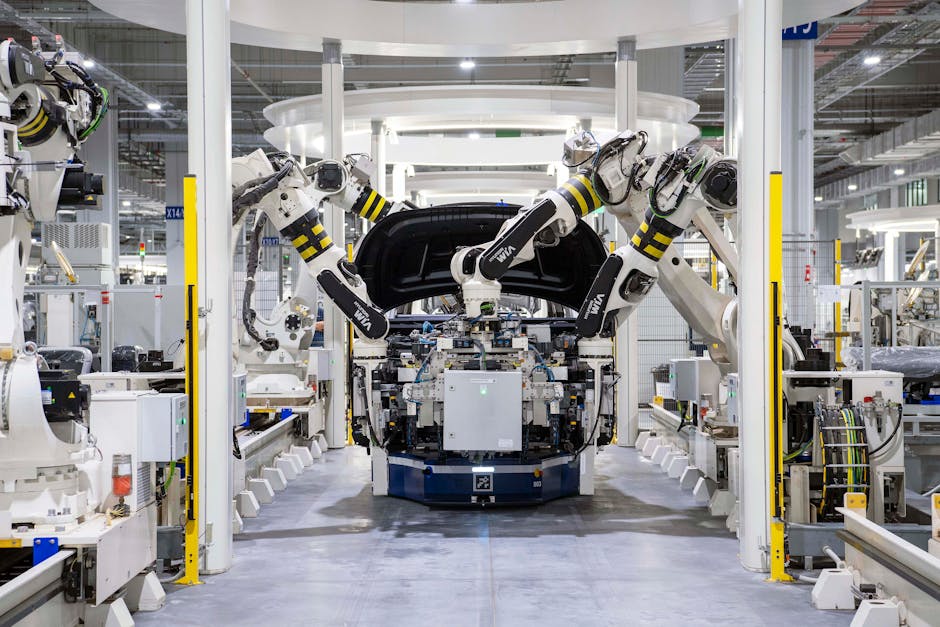
Automation is reshaping production lines, enhancing productivity and reducing human error. Robots handle tasks like welding, painting, and assembly with incredible precision. This allows human workers to focus on more complex responsibilities that require creativity and problem-solving skills.
Cost Efficiency And Quality Control
Robotics in manufacturing can lead to significant cost savings. Robots don’t require breaks and can work around the clock, increasing output. Additionally, they ensure consistent quality, which minimizes waste and defects, saving money in the long run.
Addressing Labor Shortages
In many industries, finding skilled labor is a challenge. Robotics offers a solution by performing repetitive and strenuous tasks that are difficult to fill. This creates opportunities for workers to upskill and take on new roles that are more aligned with their career aspirations.
Safety First: Reducing Workplace Hazards
Robots can operate in environments that are hazardous to humans, reducing the risk of workplace injuries. They can handle dangerous materials or work in extreme conditions, ensuring safety is prioritized. Have you ever considered how many accidents could be avoided if robots took on these risky tasks?
Flexibility And Scalability In Operations
Robots provide flexibility in manufacturing processes, allowing for quick adjustments to production lines. This means companies can adapt to market demands more swiftly. Whether it’s scaling up or down, robotics offers a dynamic approach to manufacturing that traditional methods struggle to match. The rise of robotics in manufacturing isn’t just about replacing human labor—it’s about complementing it and creating a more efficient, safe, and productive work environment. How might your industry benefit from integrating robotics into its processes? Embracing this technology could be the key to staying competitive and innovative in the ever-evolving industrial landscape.
Types Of Industrial Robots
Industrial robots have transformed the manufacturing landscape, offering precision and efficiency that human labor alone cannot achieve. As you explore the world of robotics, you’ll encounter various types, each designed for specific tasks and environments. Understanding these categories can help you determine which robot might be best suited for your needs.
Articulated Robots
Articulated robots are the most common type of industrial robots. They resemble a human arm, with rotary joints that provide a wide range of movement. Imagine a robotic arm on an assembly line, welding, painting, or assembling parts with incredible precision. Their flexibility allows them to perform complex tasks in confined spaces. If you’re looking for adaptability and versatility, articulated robots might be your go-to choice.
Scara Robots
SCARA stands for Selective Compliance Assembly Robot Arm. These robots excel in pick-and-place tasks, making them perfect for assembly operations. Unlike articulated robots, SCARA robots are limited to horizontal movement, but their speed and precision are unmatched in tasks like inserting screws or placing small parts. Think about the time saved when tedious, repetitive tasks are handled efficiently. Would SCARA robots improve your production line’s speed?
Cartesian Robots
Cartesian robots, also known as linear robots, move in straight lines along the X, Y, and Z axes. This design allows them to handle tasks with a high degree of accuracy, like CNC machining or 3D printing. The straightforward movement pattern makes them easier to program and control. Picture a Cartesian robot creating intricate designs with ease. Could this simplicity and precision benefit your manufacturing process?
Cylindrical Robots
Cylindrical robots have a rotary base and cylindrical arm, moving vertically and horizontally. This design allows them to handle tasks requiring circular movement, such as coating or assembling parts in tight spaces. Their ability to access areas that other robots might struggle with makes them unique. Imagine a cylindrical robot reaching into a narrow space to assemble parts with precision. How might this capability enhance your production efficiency?
Understanding the strengths of each type of industrial robot can guide you in choosing the right one for your operations. Which type do you think would best suit your needs? Reflecting on this can lead to smarter investments and improved productivity.
Applications In Manufacturing
Robots are transforming manufacturing with precision and efficiency. Industries use robots to complete tasks that were once done manually. This shift enhances productivity and reduces costs. Robots are especially valuable in repetitive and hazardous tasks. They ensure consistency and improve safety for workers.
Assembly Line Automation
Robots boost speed in assembly lines. They handle tasks like fastening screws and attaching parts. This automation increases production rates and ensures uniformity. Robots also minimize human error, leading to higher product quality. They work tirelessly, providing round-the-clock assembly without breaks.
Quality Control And Inspection
Robots play a crucial role in quality control. They inspect products with high accuracy. Cameras and sensors help detect defects. This ensures only flawless products reach consumers. Automated inspections save time and reduce waste. Businesses benefit from fewer returns and satisfied customers.
Material Handling
Robots excel in material handling, moving heavy items safely. They organize products efficiently on shelves. This speeds up inventory management. Robots also reduce physical strain on workers. They handle dangerous materials without risk. This improves workplace safety and boosts morale.
Welding And Painting
Robots perform welding and painting tasks with precision. They create strong welds and smooth paint finishes. Automation enhances consistency and quality. Robots can work in hazardous environments safely. This protects human workers from harmful fumes and heat.
Benefits Of Robotic Automation
Robotic automation is transforming industries worldwide, offering a multitude of benefits that reshape the manufacturing landscape. As you delve into the advantages, you’ll discover how robots enhance efficiency, precision, cost-effectiveness, and safety. Consider how these benefits could impact your own business or work environment, driving growth and innovation.
Increased Efficiency And Productivity
Robots work tirelessly, operating without breaks or fatigue. This constant activity accelerates production lines, achieving tasks faster than human workers. Imagine a factory where robots streamline assembly processes, reducing downtime and maximizing output. How much could your productivity grow with robotic assistance?
Improved Precision And Quality
Robots excel in performing complex tasks with high accuracy. Their ability to maintain consistent quality reduces errors in production. Picture a scenario where robots ensure every product meets exact specifications, enhancing customer satisfaction. Could your company benefit from this level of precision?
Cost Reduction
Robotic automation often leads to significant cost savings. While initial investments may be high, long-term savings are substantial. Consider how robots reduce material waste and minimize human errors, saving money on reworks. What financial advantages would robotic automation bring to your operations?
Enhanced Worker Safety
Robots take on dangerous tasks, protecting human workers from hazardous environments. This shift improves workplace safety, reducing accidents and injuries. Imagine a safer work environment where robots handle heavy lifting and toxic substances. How would enhanced safety impact your team’s morale and productivity?
As you reflect on these benefits, think about the potential changes robotic automation could bring to your industry. Could it be the key to unlocking new levels of efficiency, quality, and safety in your business?
Challenges And Considerations
Robotics in industry is a growing trend with immense potential. Yet, businesses face challenges that require careful consideration. These challenges range from financial aspects to workforce impact. Companies must weigh these factors before embracing robotics. Understanding these concerns can lead to better decisions and smoother transitions.
Initial Investment Costs
Deploying robots requires a significant initial investment. Costs can include purchasing the robots, installation, and infrastructure upgrades. Smaller businesses might find this prohibitive. Evaluating long-term benefits against upfront costs is crucial. Budgeting wisely helps manage financial risks.
Workforce Displacement Concerns
Robots can replace human jobs. This leads to concerns about employment. Workers fear losing jobs to machines. Companies must consider retraining programs. Providing education ensures workers adapt to new roles. Balancing technology with human resources is vital.
Maintenance And Technical Support
Robots need regular maintenance to function effectively. Technical support is essential for troubleshooting issues. Skilled technicians are necessary to keep systems running. Without proper upkeep, robots can become liabilities. Investing in support services is key to successful integration.
Integration With Existing Systems
Integrating robots with current systems poses challenges. Compatibility issues may arise. Businesses must assess how robotics fits into existing workflows. Proper planning and testing are required. Seamless integration ensures efficient operations. The goal is to enhance, not disrupt, current processes.
Future Trends In Industrial Robotics
Industrial robotics are shaping the future with smart automation and AI integration. Robots enhance efficiency and precision in manufacturing. Expect innovations in collaboration between humans and machines.
The future of industrial robotics is not just a buzzword—it’s a reality shaping the manufacturing landscape. As technology races forward, robots are becoming smarter, more adaptive, and increasingly integral to industrial processes. Whether you’re a seasoned engineer or someone curious about tech, understanding these trends will give you a glimpse into how factories of the future will operate.
Collaborative Robots (cobots)
Cobots are transforming the way humans and robots interact in the workplace. Unlike traditional robots, which often work behind safety barriers, cobots are designed to work alongside humans. They are equipped with sensors and safety features, making them safe and efficient companions on the assembly line. Imagine a small business that needs to scale production without hiring a large workforce. Cobots can step in to handle repetitive tasks, freeing up human workers for more complex jobs. This partnership between man and machine enhances productivity and can reduce costs—a win-win for businesses.
Ai And Machine Learning Integration
The integration of AI and machine learning in industrial robots is setting new standards for efficiency and precision. Robots are now learning from their environments, adapting to changes, and predicting outcomes with remarkable accuracy. This capability is transforming industries that require high precision, such as electronics and automotive manufacturing. Picture a robot that can adapt to a new product line without needing days of reprogramming. With AI, this is possible. The robot learns from previous tasks and applies this knowledge to new challenges. This flexibility can significantly reduce downtime and increase output.
Iot And Connectivity
The Internet of Things (IoT) is not just for smart homes; it’s revolutionizing industrial robotics too. Connected robots can communicate with each other and with centralized systems, providing real-time data and analytics. This connectivity allows for better monitoring, maintenance, and optimization of robotic systems. Consider a factory floor where robots alert you to maintenance needs before a breakdown occurs. IoT enables predictive maintenance, reducing unplanned downtime. This connectivity ensures that your production line runs smoothly, saving both time and money.
Sustainability And Green Robotics
With environmental concerns growing, sustainability is becoming a crucial aspect of industrial robotics. Manufacturers are focusing on creating robots that consume less energy and produce less waste. Green robotics is not just about eco-friendly machines but also about sustainable manufacturing practices. Think about a robot designed to minimize energy usage during idle times. These innovations are not only good for the planet but can also lead to cost savings. As a business, adopting green robotics can enhance your brand’s reputation and appeal to eco-conscious consumers. The future of industrial robotics is bright and full of potential. As you navigate these trends, consider how they can be applied to your industry. Are you ready to embrace the possibilities?
Case Studies Of Robotic Implementation
Robotics has significantly transformed various industries. Each sector has unique ways of integrating robotics. These case studies highlight the impact of robotics on industry efficiency and productivity.
Automotive Industry
The automotive industry leads in robotic implementation. Robots perform tasks like welding, painting, and assembly. These tasks are repetitive and require precision. Robotics ensures high-quality production and reduces human error. This results in faster production times and cost savings.
Electronics Manufacturing
Electronics manufacturing relies heavily on robots for precision. Robots handle delicate components with care. They assemble intricate parts faster than humans. This boosts production rates and enhances product reliability. Companies benefit from consistent quality and reduced labor costs.
Food And Beverage Processing
Robots in food processing improve hygiene and efficiency. They perform tasks like sorting, packaging, and quality control. Automation reduces contamination risks and ensures consistent product quality. This leads to increased consumer trust and brand loyalty.
Pharmaceutical Production
Pharmaceutical production demands precision and safety. Robots help in tasks like mixing, filling, and packaging. Automation minimizes contamination and human error. It ensures compliance with strict industry regulations. Companies achieve higher production rates with improved safety.
Frequently Asked Questions
What Is The Role Of Robotics In Industry?
Robotics in industry enhances productivity and efficiency. Robots perform repetitive tasks with precision, reducing human error. They enable automation of complex processes, increasing output and consistency. Robotics also aids in maintaining safety standards by handling hazardous materials, ensuring worker safety, and improving overall operational capabilities.
How Do Robots Impact Manufacturing Processes?
Robots streamline manufacturing by automating tasks like assembly and quality control. They increase speed and accuracy, reducing costs and waste. Robotics enables flexible production lines and adapts to changing demands quickly. Their impact leads to improved product quality, consistency, and efficient resource management in manufacturing environments.
What Are The Benefits Of Industrial Robots?
Industrial robots offer numerous benefits, including increased productivity and reduced labor costs. They improve precision, ensuring consistent product quality. Robots can work in hazardous environments, enhancing worker safety. They enable 24/7 operations, boosting output and efficiency. Their versatility allows adaptation to various tasks, optimizing industrial processes.
How Do Robots Improve Workplace Safety?
Robots improve safety by performing hazardous tasks, reducing human exposure to risks. They handle dangerous materials and work in extreme conditions, minimizing accidents. Automation of repetitive tasks reduces worker fatigue and injury. Robotics ensures compliance with safety standards, creating a safer work environment for employees.
Conclusion
Robotics in industry is transforming work processes. Machines handle repetitive tasks efficiently. This change boosts productivity and safety. Workers now focus on creative roles. Industries benefit from reduced errors and consistent quality. Robotics also cuts operational costs. Companies can invest more in innovation.
The future looks promising with advanced technologies. Adopting robotics is essential for staying competitive. Embrace this shift for a successful business journey.