

Choosing the right portable computer can feel overwhelming with so many options available. You’ve probably come across terms like ultrabook, notebook, and laptop, but what do they actually mean?
And more importantly, which is the best fit for your needs? Imagine finding a device that perfectly complements your lifestyle, whether you’re a student, a professional, or just someone who loves staying connected. This guide will help you understand the key differences between ultrabooks, notebooks, and laptops, so you can make a confident decision.
Dive in and discover which device is your ideal match, ensuring you never settle for less than what you truly need.
Ultrabook Features
Ultrabooks are becoming popular choices for tech-savvy users. They offer a blend of portability, performance, and aesthetics. These devices cater to those who need efficiency on the go. Let’s dive into the features that set ultrabooks apart.
Design And Build
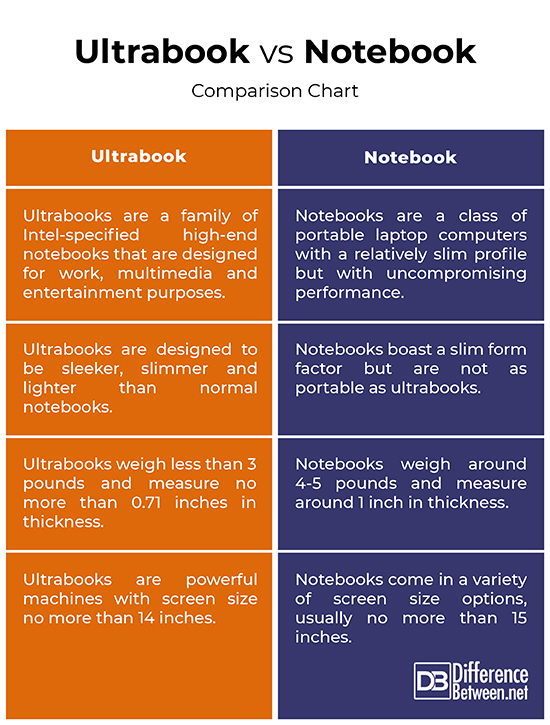
Ultrabooks boast a slim and sleek design. They often weigh less than traditional laptops. The materials used are usually premium, like aluminum or magnesium. This gives them a sturdy feel without extra weight. The compact design makes them easy to carry anywhere. Perfect for those always on the move.
Performance Capabilities
Despite their size, ultrabooks pack a punch. They come with powerful processors, often from Intel’s Core series. SSDs are common, ensuring fast boot times and quick data access. While they aren’t gaming machines, they handle multitasking with ease. Ideal for professionals needing reliable performance.
Battery Life
Long battery life is a key feature of ultrabooks. They can last up to 10 hours or more on a single charge. This makes them ideal for long flights or commutes. Energy-efficient components help extend battery life. Users can work uninterrupted without constantly searching for a plug.
Credit: www.differencebetween.net
Notebook Characteristics
Notebooks have carved a niche in the computing world. Their features balance between portability and functionality. This segment explores essential aspects of notebooks. Discover their portability, affordability, and usage scenarios.
Portability And Size
Notebooks are compact. Their light weight makes them easy to carry. They fit snugly in backpacks. Designed for on-the-go users. Ideal for students and travelers. Their screen size usually ranges from 10 to 15 inches. Perfect for small spaces or tight desks.
Cost And Affordability
Notebooks are budget-friendly. Prices vary based on features. Basic models are very affordable. Premium models may cost more. They offer a good balance of price and performance. Suitable for users with limited budgets.
Usage Scenarios
Notebooks suit basic tasks. Great for browsing, typing, and streaming. Perfect for students and casual users. Business professionals use them for presentations. Handy for everyday office tasks. Not ideal for heavy gaming or complex software.
Laptop Versatility
Have you ever found yourself stuck between choosing an Ultrabook, a Notebook, or a Laptop? The decision isn’t always straightforward. Laptops, however, have a unique versatility that often makes them a preferred choice. They offer a blend of functionality and flexibility, catering to a wide array of needs. Whether you’re a student, a professional, or someone who loves gaming, laptops can adapt to your lifestyle.
Hardware Options
Laptops come with a wide range of hardware options. You can pick a model with the right balance of performance and price for your needs. From high-end processors to large storage capacities, you have choices that impact speed and efficiency.
Imagine upgrading from a basic model to one with a solid-state drive. You’ll notice a remarkable improvement in boot times and file access. It’s like giving your laptop a shot of adrenaline. Are you looking for a machine with a powerful graphics card for gaming? Laptops have got you covered.
Customization Potential
Customization is where laptops truly shine. Unlike Ultrabooks and Notebooks, which often have fixed specifications, laptops allow you to personalize. You can add more RAM or swap out the hard drive for an SSD.
Think back to a time when you needed more memory for a demanding task. With a laptop, you can upgrade hardware to match your requirements. This flexibility ensures your device evolves as your needs change. How would your laptop look if it had a personalized skin or keyboard cover? With a laptop, you can add your personal touch.
Ideal For Professionals
Professionals often lean towards laptops due to their versatility. A laptop can be a mobile office, offering power and portability in one package. You can work on the go or set up shop in a coffee shop.
Imagine drafting a report while traveling. With a laptop, you can work seamlessly, without compromising on power. The ability to connect various peripherals transforms it into a workstation. What features matter most to you when choosing a laptop for professional use?
Laptops stand out with their adaptability, making them a favorite for many users. Next time you’re in the market for a computing device, consider the versatility of a laptop. It might just be the perfect fit for your diverse needs.
Credit: www.ultrabookreview.com
Comparing Portability
Portability is a crucial factor in choosing between ultrabooks, notebooks, and laptops. Each device offers unique advantages for users on the go. Understanding these differences helps in making an informed decision.
Weight Considerations
Ultrabooks are known for their lightweight design. They often weigh less than three pounds. This makes them easy to carry around. Notebooks weigh slightly more, usually around five pounds. They offer a balance between portability and functionality. Laptops can weigh up to ten pounds, depending on the model. They provide more features but are less portable.
Travel Convenience
Ultrabooks fit easily into backpacks or briefcases. Their slim design is perfect for frequent travelers. Notebooks are also convenient for travel. They are compact but may need more space in bags. Laptops require larger bags or cases. They are less convenient for air travel due to size and weight.
Workspace Adaptability
Ultrabooks adapt well to small spaces. They are ideal for coffee shops or compact desks. Notebooks offer flexibility in workspace settings. They fit comfortably on standard desks and tables. Laptops need more room for use. They are best suited for dedicated workspaces with enough space.
Performance Differences
When choosing between an Ultrabook, Notebook, and Laptop, understanding the performance differences is crucial. You want a device that matches your needs whether you’re editing videos, gaming, or just browsing. Let’s break down the key aspects like processor speed, graphics, display, and multitasking efficiency.
Processor And Speed
The processor is the heart of your device. Ultrabooks often boast the latest Intel Core processors designed for speed and efficiency. This means quicker startup times and less lag during intensive tasks. Notebooks, while generally less powerful, offer solid performance for everyday tasks and web browsing.
Laptops, on the other hand, can vary widely. High-end models can rival Ultrabooks with top-tier processors, while budget options might be slower. Think about what you’ll be using your device for. A high-speed processor is essential if you’re into gaming or video editing.
Graphics And Display
Graphics are vital if you’re a gamer or a creative professional. Ultrabooks usually have integrated graphics, which are good but may not support heavy gaming or advanced creative software. However, they often have high-resolution displays that enhance visual experiences.
Notebooks typically come with basic graphics cards suitable for daily tasks. Laptops offer the most flexibility, with options for dedicated graphics cards. If you crave stunning visuals and smooth gameplay, a laptop with a dedicated graphics card might be your best bet.
Multitasking Efficiency
Do you often have multiple tabs and applications open? Multitasking efficiency is critical. Ultrabooks excel here, thanks to their fast processors and often substantial RAM, allowing you to switch between tasks seamlessly.
Notebooks, while competent, may struggle with heavy multitasking. Laptops, depending on their specs, can handle multitasking well. Consider what a typical day looks like for you. If multitasking is essential, prioritize devices with higher RAM and efficient processors.
Choosing the right device comes down to your specific needs. What tasks do you perform daily, and what performance aspects matter most to you? Dive deep into what you truly need from your device, and you’ll find the perfect match.
Battery Life Comparison
Choosing between ultrabooks, notebooks, and laptops depends on battery life needs. Ultrabooks often excel, offering extended battery life for portability. Notebooks and laptops provide balanced options, but with varying battery durations based on size and features.
When choosing between an Ultrabook, Notebook, or Laptop, one of the crucial factors to consider is battery life. Whether you’re a student, a traveler, or a professional, the longevity of your device’s battery can significantly impact your productivity and convenience. Understanding how these devices compare in terms of battery performance can help you make an informed decision.Power Consumption
Ultrabooks are designed for efficiency. They typically have low-power processors and SSDs, which use less energy compared to traditional hard drives. This makes them ideal for those who need a device that can last through a long flight or a day at a café. Notebooks often strike a balance between performance and power consumption. They may not last as long as Ultrabooks, but they offer more processing power. If you’re using your device for tasks like photo editing or gaming, expect the battery to drain faster. Laptops, especially those with high-performance specs, can consume more power. They are great for intensive tasks but may require more frequent charging. Consider your typical usage to decide if the trade-off in battery life is worth it.Charging Time
Ultrabooks frequently come with fast-charging capabilities. You can often get several hours of use from just a short charge. This can be a lifesaver if you’re in a hurry and need to top up your battery quickly. Notebooks generally have moderate charging times. They might not charge as quickly as Ultrabooks, but they often have larger batteries. This means you might not need to charge them as often. Laptops with high-performance batteries can take longer to charge. If you’re someone who forgets to plug in overnight, this could be a consideration. Would a longer charge time disrupt your routine?Longevity On The Go
Ultrabooks are perfect companions for those always on the move. Their batteries are designed to last, making them suitable for long trips or workdays without access to power outlets. Imagine completing a whole day’s work without needing to find a charger. Notebooks provide a reasonable compromise. They offer decent battery life for most daily activities. If you’re not constantly on the road, they can be a reliable choice. Laptops, while powerful, may not offer the same level of portability in terms of battery life. If your lifestyle involves frequent travel, consider whether carrying a charger or power bank is feasible. What would it mean for your daily routine if your battery runs out when you need it most? Choosing between an Ultrabook, Notebook, or Laptop involves weighing your priorities. Think about how you use your device daily and what aspects of battery life matter most to you.Price Range Analysis
Choosing between an Ultrabook, Notebook, and Laptop can be challenging. Price plays a crucial role in this decision. Each device category offers varied price points to suit different budgets. Understanding the price differences helps in making an informed choice.
Entry-level Options
Entry-level laptops are often more affordable. They cater to basic computing needs. Expect prices to start around $300. Notebooks in this range offer basic performance. They suit users with light tasks like browsing and word processing. Ultrabooks at this level are rare. They usually start at a higher price point.
Mid-range Choices
Mid-range laptops offer better performance and features. Prices range from $500 to $1000. Notebooks in this category provide more storage and speed. Ultrabooks become more accessible here. They offer a balance between performance and design. Expect to pay around $700 to $1200 for a mid-range Ultrabook.
Premium Models
Premium laptops boast advanced features and sleek designs. Prices often exceed $1000. Notebooks in this range deliver high-end performance. They suit professionals and gamers. Ultrabooks here offer top-notch build quality and performance. They are priced above $1200. These models focus on delivering a premium experience.
User Needs And Preferences
Choosing between an Ultrabook, Notebook, or Laptop can feel like deciphering a complex code. What you need often depends on your specific lifestyle and goals. Understanding your requirements is crucial to making the right choice. Whether you’re a student, a business professional, or a casual user, each device offers unique benefits tailored to your needs.
Student Requirements
Students often prioritize portability, battery life, and affordability. An Ultrabook might be ideal due to its sleek design and long-lasting battery. Picture yourself in a crowded lecture hall, effortlessly taking notes without worrying about finding an outlet.
On the other hand, notebooks can offer a budget-friendly option without compromising on essential features. If you’re juggling assignments and part-time work, a notebook might be your best friend, providing just enough power to handle everyday tasks.
Business Use Cases
Business professionals typically focus on performance, reliability, and connectivity. Laptops often cater to these needs with robust processors and versatile connectivity options. Imagine closing a deal with your laptop seamlessly connected to a projector during a crucial presentation.
Ultrabooks can be a game-changer for those who value mobility. Their lightweight design allows you to travel effortlessly, while maintaining a professional image. Does your job require frequent travel? An Ultrabook could be your ideal companion.
Casual User Demands
Casual users often seek simplicity and entertainment features. If you’re binge-watching the latest series, a laptop with a larger screen and better audio might enhance your experience. Consider how much you enjoy watching movies or browsing the web from your couch.
For those who use their device primarily for social media and light browsing, a notebook might suffice. It offers essential functionalities without the frills, allowing you to stay connected with friends and family effortlessly.
Have you considered what truly matters in your daily tech usage? Reflecting on your habits can lead to a more satisfying purchase.
Future-proofing Considerations
Choosing between an ultrabook, notebook, or laptop requires future-proofing considerations. Focus on processor speed and RAM for longevity. Battery life and port availability are key for flexibility and adaptability.
When deciding between an Ultrabook, Notebook, or Laptop, future-proofing is a crucial consideration. You want a device that won’t feel outdated in a couple of years. This section will guide you through the aspects that ensure your tech investment remains relevant for the foreseeable future.Technology Trends
Technology is evolving at a breakneck speed. Devices that support the latest tech trends like AI integration, 5G connectivity, and advanced graphics capabilities can significantly enhance your experience. For instance, if you enjoy gaming or graphic design, a device with a cutting-edge GPU will serve you well in the future. Keep an eye on trends that matter to you. Ask yourself if your device supports emerging technologies that could become essential. A lack of compatibility might mean having to upgrade sooner than you’d like.Upgrade Potential
Consider how easy it is to upgrade your device. Not all devices are created equal in this regard. Ultrabooks, for instance, often have components like RAM soldered to the motherboard, making upgrades challenging. On the other hand, many laptops allow for RAM and storage upgrades. This flexibility can extend the life of your device. Double-check upgrade options before purchasing so you can add new capabilities as your needs evolve.Long-term Investment
Think of your purchase as a long-term investment. Choose a device that aligns with your future plans and professional goals. For example, if you plan to dive into video editing, invest in a laptop with a robust processor and ample storage. Also, consider the build quality. A sturdy, well-constructed device can withstand the rigors of daily use longer than a cheaper alternative. You don’t want to spend money on repairs or replacements prematurely. In the end, the right choice depends on your unique needs and how you envision using your device in the future. Are you prepared to adapt to new technology trends? Is your device upgrade-friendly? Treat your tech decision like a long-term partnership, ensuring it grows with you over time.
Credit: emkees.wordpress.com
Frequently Asked Questions
What Is The Difference Between Ultrabook And Laptop?
Ultrabooks are lightweight, portable, and designed for efficiency. They offer longer battery life and sleek designs. Laptops, in contrast, are versatile, offering more powerful hardware options. They suit various tasks from gaming to professional work. Both serve distinct purposes based on user needs.
Are Ultrabooks Better Than Notebooks?
Ultrabooks excel in portability and battery life, ideal for travel. Notebooks provide more options in hardware and features. Choosing between them depends on your priorities: mobility or functionality. Ultrabooks are perfect for those prioritizing sleek design and efficiency.
Can A Notebook Replace A Laptop?
Notebooks can replace laptops for basic tasks like browsing and document editing. However, they might lack high-performance capabilities for demanding applications. Laptops offer more power and versatility, suitable for gaming and professional software. Consider your needs before deciding.
Which Is More Affordable, Ultrabook Or Laptop?
Generally, laptops offer a wider price range, often more affordable than ultrabooks. Ultrabooks tend to be pricier due to their design and battery life. Laptops are ideal for budget-conscious users seeking performance options. Ultrabooks cater to those preferring premium design.
Conclusion
Choosing between an ultrabook, notebook, or laptop depends on your needs. Ultrabooks offer sleek designs and portability. Notebooks provide versatility at a lower price. Laptops deliver power for demanding tasks. Consider your budget, usage, and preferences. Think about size, weight, and battery life.
Each option has its strengths and weaknesses. Understand what you value most. This helps you make a smart decision. Remember, technology keeps evolving. Stay informed about the latest models. Your choice should fit your lifestyle. Happy computing!



