Affiliate Disclosure: This post may contain affiliate links. If you purchase through links on our site, we may earn an affiliate commission at no extra cost to you.
Have you ever found yourself squinting at your computer screen, or maybe leaning in a bit too close after hours of work or gaming? You’re not alone.
The distance between you and your computer monitor can make a huge difference in your comfort and productivity. If you’ve been experiencing eye strain, headaches, or even just a sense of fatigue after screen time, it might be time to reconsider how far you’re sitting from your monitor.
Understanding the best viewing distance for your computer monitor can transform your daily digital experience. We’ll dive into the science behind finding that perfect spot for your eyes, helping you enhance your comfort and efficiency. Stick around to discover how a simple adjustment could make all the difference in your daily screen time.
Factors Influencing Viewing Distance
Choosing the best viewing distance for your computer monitor can improve your comfort and productivity. Several factors play a role in determining this distance. These factors ensure you maintain a healthy posture and protect your eyes. Let’s explore some key aspects that influence how far you should sit from your screen.
Screen Size And Resolution
Screen size and resolution are crucial when setting your viewing distance. Larger screens often require you to sit further back. This helps you see the entire screen without moving your head. High-resolution monitors provide sharper images, letting you sit closer without seeing pixels. Always adjust your position based on both size and resolution.
Desk Setup And Ergonomics
Your desk setup influences your monitor’s viewing distance. The monitor’s height and angle are important. The top of the screen should be at or slightly below eye level. This prevents neck strain. Ensure your chair and desk allow you to maintain a 90-degree angle at the elbows. A proper setup promotes good posture and reduces discomfort.
Individual Vision And Comfort
Personal vision plays a big role in viewing distance. Some people may need to sit closer due to poor eyesight. Others might find comfort sitting further away. Always prioritize comfort. If you strain your eyes, adjust your distance. Take regular breaks to reduce eye fatigue. Comfort should guide how close or far you sit from the monitor.
Health Impacts Of Improper Distance
Finding the right distance from your computer monitor is crucial. Improper distance can lead to various health issues. Many people overlook this simple aspect of their workspace. It impacts their well-being and productivity. Learn about the potential health consequences of sitting too close or too far from your screen.
Eye Strain And Fatigue
Staring at a screen too long can tire your eyes. The muscles in your eyes work overtime. This causes eye strain and fatigue. Your eyes might feel dry or itchy. Blurred vision can occur. Proper screen distance can lessen these symptoms. Give your eyes a rest by following the 20-20-20 rule. Look away from the screen every 20 minutes. Focus on something 20 feet away. Do this for at least 20 seconds.
Neck And Back Pain
Incorrect screen distance can cause neck and back pain. Slouching or leaning forward strains your muscles. Over time, this leads to discomfort or even chronic pain. Ensure your monitor is at eye level. Keep your back straight. Adjust your chair and desk height. Proper posture reduces strain and pain. Regular breaks help too. Stretch and move around to keep your muscles relaxed.
Impact On Productivity
Health issues from improper monitor distance affect productivity. Eye strain makes focusing hard. Neck and back pain distracts from tasks. These discomforts slow down work pace. Adjusting your monitor distance can boost focus. It enhances comfort and efficiency. A well-designed workspace supports better work habits. This leads to improved output and job satisfaction.
Calculating The Ideal Distance
Finding the perfect viewing distance for your computer monitor can transform your digital experience, reducing eye strain and enhancing productivity. The ideal distance isn’t just about comfort; it’s about creating an ergonomic environment that boosts your focus and efficiency. So how do you determine this sweet spot? Let’s break it down into simple steps.
General Guidelines
Start with a basic rule: keep your monitor about an arm’s length away. This typically means 20-30 inches from your eyes. Adjust the distance based on the size of your monitor. Larger screens may need more space to ensure you can see the entire display without moving your head.
Think about posture. Your eyes should be level with the top of the screen, encouraging a slight downward gaze. This not only keeps your neck relaxed but also aligns your spine correctly.
Customizing For Different Screens
Different screens require different approaches. If you’re using a 27-inch monitor, you might push it back a bit more than a smaller 24-inch screen. This helps to take in the whole display without unnecessary eye movement.
Consider resolution and pixel density. Higher resolution screens can be closer since they provide sharper images. Lower resolution screens benefit from being at a greater distance to reduce pixelation and eye strain.
Adjustments For Multi-monitor Setups
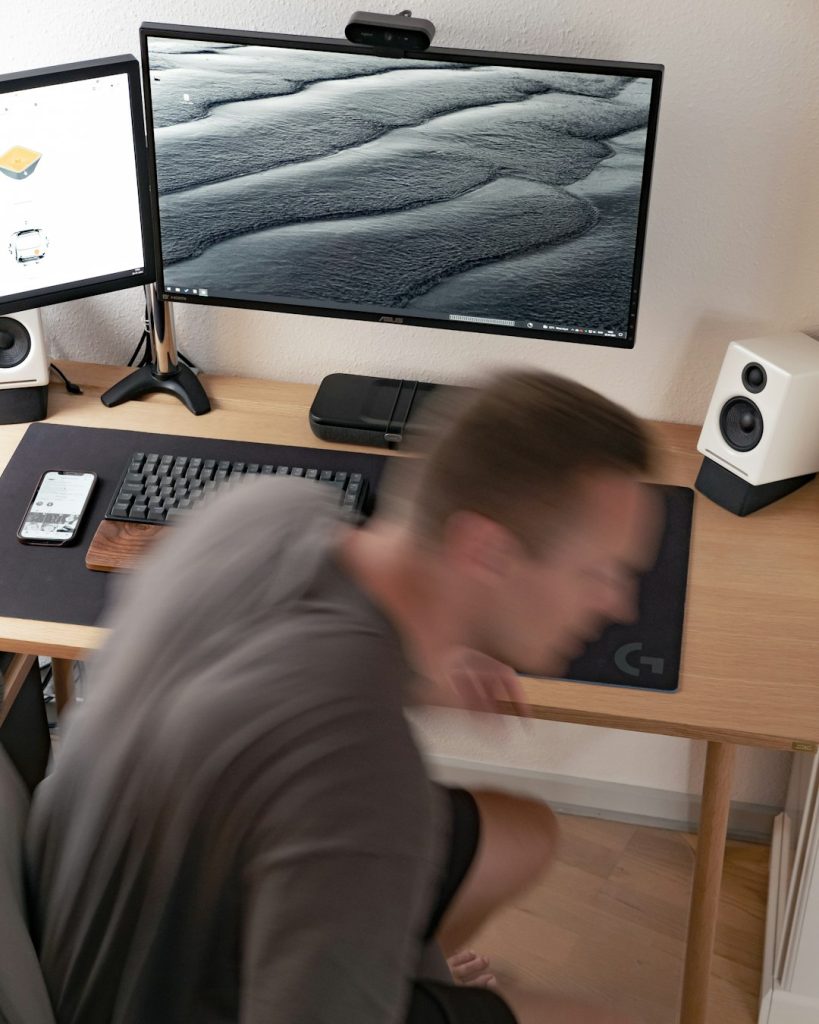
Multi-monitor setups demand a unique approach. Position the primary monitor directly in front of you, maintaining the arm’s length guideline. Secondary monitors should be slightly angled and the same distance away.
If you often use both screens simultaneously, ensure you can shift your gaze between them without turning your head significantly. This setup reduces neck strain and allows fluid multitasking.
Are your monitors too close or too far? A simple tweak might be the difference between a productive day and a headache. Experiment with the distance and angle, and see what works best for your setup.
Remember, your viewing distance isn’t just a number—it’s a key to comfort and efficiency. How will you adjust your setup today?
Improving Monitor Ergonomics
Finding the ideal viewing distance for your computer monitor enhances comfort and reduces strain. Sit about arm’s length away, ensuring the screen’s top is at or slightly below eye level. Adjusting your posture alongside this distance supports better monitor ergonomics.
Improving Monitor Ergonomics In today’s digital world, where you spend countless hours in front of screens, optimizing monitor ergonomics is crucial. It’s not just about productivity but also your well-being. A well-positioned monitor can help reduce strain and improve comfort.
Adjustable Monitor Stands
An adjustable monitor stand is a simple yet powerful tool. It allows you to set your screen at the perfect height. This can help prevent neck and shoulder pain, making your workday more comfortable. Consider using a stand that offers height and tilt adjustments. This flexibility helps cater to your specific needs. It’s an easy way to enhance your workspace ergonomics.
Monitor Arm Benefits
A monitor arm is a game-changer for desk setups. It frees up valuable desk space, giving you room to work. Plus, it allows you to adjust the monitor effortlessly to suit your posture. Imagine being able to pull the screen closer when needed or push it back when you’re done. This dynamic positioning helps maintain a healthy distance from the screen. Your eyes will thank you for it.
Positioning Tips For Comfort
Finding the right position for your monitor doesn’t have to be complicated. Start by placing your monitor at eye level. This helps prevent you from tilting your head up or down. Ensure the monitor is about an arm’s length away from you. This distance helps minimize eye strain. How comfortable are you feeling after these adjustments? Lastly, angle the monitor slightly upward. This reduces glare and enhances visibility. It’s a small tweak with a big impact on your comfort. By taking these steps, you can create a more ergonomic and comfortable workspace. Your body will appreciate the effort, and your productivity might just get a boost too.
Tips For Maintaining Optimal Viewing Distance
Maintaining the right distance from your computer monitor is crucial. It helps reduce eye strain and enhances comfort. This guide shares useful tips to maintain optimal viewing distance. Simple practices can make a big difference.
Regular Breaks And Eye Exercises
Take breaks every 20 minutes. Look at something 20 feet away for 20 seconds. This is the 20-20-20 rule. It relaxes your eye muscles. Blink often to keep eyes moist. Try simple eye exercises. Roll your eyes slowly. Look left, right, up, and down. These steps keep your eyes fresh.
Lighting And Glare Reduction
Adjust the room lighting. It should not be too bright or dim. Use curtains or blinds to control natural light. Position your monitor away from windows. Glare can cause eye fatigue. Use an anti-glare screen filter. It helps reduce reflections. Ensure your screen brightness matches the room light. This balance is key for eye comfort.
Software And Tools For Ergonomic Reminders
Use software to remind you of breaks. Apps like Eyeleo and Stretchly can help. They prompt you to rest your eyes. Some tools also guide you through exercises. Set reminders for posture checks. Good posture reduces strain on your neck and back. These tools promote healthy computer habits.
Frequently Asked Questions
What Is The Ideal Monitor Viewing Distance?
The ideal distance is about arm’s length, or 20-30 inches. This helps minimize eye strain and improve focus. Adjusting this distance can depend on screen size and resolution. Larger monitors may require slightly more distance for optimal viewing comfort.
How Does Monitor Size Affect Viewing Distance?
Larger monitors generally require a greater viewing distance. This ensures you can comfortably see the entire screen without straining. For example, a 27-inch monitor might need a distance of 25-35 inches. Adjust according to your personal comfort and workspace limitations.
Why Is Monitor Viewing Distance Important?
Proper viewing distance reduces eye strain and enhances visual comfort. It helps maintain a healthy posture and minimizes fatigue. Correct distance allows better focus on screen details and prevents excessive head movements. Adjusting this distance can significantly improve your overall computing experience.
How Can I Measure Correct Viewing Distance?
To measure, sit at your desk and extend your arm towards the screen. Your fingertips should touch the screen surface. This method provides a quick and effective way to gauge distance. Adjust accordingly for larger monitors or specific personal comfort needs.
Conclusion
Finding the right monitor distance enhances your work and play. Eyes feel less strain, improving focus and comfort. Optimal distance depends on screen size and resolution. Larger screens require more space for best results. Test different distances for your setup.
Adjust until your eyes feel comfortable. Better viewing brings clarity and ease. Your productivity and enjoyment will rise. Keep comfort in mind as you use your computer. Regular breaks help maintain eye health. Happy viewing and working!